

The U.S. Government Just Recognized Content Creators as Small Businesses. But Does That Include OnlyFans Creators?

From the Editor's Desk | October 17, 2026
By Joseph Haecker, Founding Editor-in-Chief, Only Fans Insider Magazine and founder of Sxgram, social media for adults
On October 15, 2026, the United States Small Business Administration made an announcement that I suspect most content creators haven't heard about. The agency issued new guidance recognizing qualifying content creators within the federal small-business framework, potentially bringing greater clarity to how millions of digital entrepreneurs are classified. It's the kind of government announcement that probably won't generate much excitement on social media, particularly among people who have never heard of the SBA. But if you're earning money through OnlyFans, YouTube, podcasting, streaming, digital publishing, or social media, I think this is something you should understand.
The announcement raises some interesting questions about how the federal government views the creator economy and the businesses being built within it. It also brings attention to financial resources that many creators may not even realize exist, including government-backed lending programs designed to help qualifying small businesses grow. But there's another side to this story, particularly for people working in the adult content industry, where existing federal restrictions may still prevent certain businesses from accessing those opportunities. And that's why I believe this announcement deserves more than a passing headline.
First, What the Heck Is the SBA?
If you've never heard of the Small Business Administration, you're probably not alone, especially if your entrepreneurial journey began by creating an account on a social media platform. Most people don't wake up one morning, decide to become content creators, and immediately start researching federal business classifications, lending programs, and government contracting opportunities. They buy a camera, create a profile, upload some content, and hope someone notices. If they're fortunate, someone eventually pays them for what they've created, and that's where an entirely different journey begins.
Maybe that first payment is $50, followed by $500, and eventually a few thousand dollars a month. Suddenly, they're purchasing equipment, managing subscribers, creating content calendars, negotiating sponsorships, paying for editing software, and trying to understand their tax obligations. What began as something fun, experimental, or perhaps even financially necessary has slowly evolved into a business, whether they recognize it or not. And yet, somewhere along the way, nobody necessarily explained what it actually means to operate a business.
That's where the Small Business Administration enters the conversation, because the SBA is a federal agency designed to support American entrepreneurs and small businesses. It provides access to business education, counseling, financing programs, and resources that can help eligible companies start, operate, and grow. It doesn't generally hand money directly to entrepreneurs simply because they have a good idea, but it does support lending programs that can make financing more accessible to qualifying businesses. And contrary to what some people might assume, you don't have to own a restaurant, retail store, or construction company to be considered a small-business owner.

What Actually Changed on October 15?
The SBA's announcement clarified how qualifying creator-led businesses can fit within existing federal industry classifications, including NAICS 5121, which covers Motion Picture and Video Industries. NAICS stands for the North American Industry Classification System, a framework used by government agencies to categorize businesses according to their primary economic activities. Restaurants have classifications, advertising agencies have classifications, and companies producing audiovisual media have classifications as well. The announcement helps explain how modern digital media businesses, including certain video creators, podcasters, streamers, and publishers, fit into that framework.
This doesn't mean the federal government suddenly invented a new category called "content creator," nor does it mean creators were previously prohibited from operating legitimate small businesses. The guidance instead provides additional clarity about how qualifying creator-led businesses should identify their activities within the existing classification system. Different businesses may require different six-digit NAICS codes depending on what they actually produce and how they generate revenue. But the larger significance is that the SBA is explicitly acknowledging the economic importance of businesses built around digital content.
The SBA's announcement referenced an estimated 27 million creator-led businesses in the United States, which is an extraordinary number when you stop to think about it. We're talking about people creating intellectual property, selling subscriptions, generating advertising revenue, negotiating brand partnerships, purchasing production equipment, and sometimes employing entire teams. These aren't necessarily people posting videos for attention or collecting likes as a hobby; many are operating genuine commercial enterprises with customers, expenses, and financial responsibilities. Yet I suspect a substantial number of them have never considered whether traditional small-business resources might apply to their work.
Let's Talk About Something Creators Actually Care About: Money
One of the most interesting aspects of this announcement is the conversation it opens about access to business financing, because creating content and building a sustainable business are not necessarily the same thing. The SBA supports several lending programs, including its Microloan program, which provides loans of up to $50,000 through participating intermediary lenders. Its primary 7(a) loan program can support qualifying businesses with financing of up to $5 million, depending on the circumstances and applicable requirements. These programs existed before the October 15 announcement, but the new guidance may encourage more creators to investigate whether their businesses qualify.
Before anyone starts planning how to spend $50,000, however, I want to make something absolutely clear about what this announcement does and does not mean. The government is not offering automatic payments to influencers, and having an OnlyFans account does not suddenly entitle someone to a federally backed business loan. These are financing programs with eligibility requirements, underwriting standards, repayment obligations, and lender approval processes. The announcement clarifies aspects of business classification; it does not guarantee that any individual creator will receive financing.
But imagine what access to appropriate financing could mean for someone who is already operating a successful and eligible creator business. A podcaster might invest in professional recording equipment, a digital publisher might hire additional staff, and a video producer might expand into a dedicated production studio. A creator who has demonstrated consistent revenue could potentially use financing to improve operations, increase production capacity, or support business growth. Those are ordinary entrepreneurial activities, and I think it's interesting that so many creators have never been encouraged to consider themselves part of that larger small-business economy.
Now, Here's Where Things Get Complicated for Adult Content Creators
The SBA's announcement becomes particularly interesting when we examine what it means for people producing adult content, because recognizing a business is not the same thing as making it eligible for federal financing. Under existing federal regulations, certain sexually oriented businesses remain ineligible for SBA business loans, even when their operations are entirely legal. Specifically, 13 CFR § 120.110(p) excludes businesses engaged in certain sexually oriented performances or deriving more than a minimal amount of revenue from specified sexually oriented products, services, or depictions. Nothing in the October 15 announcement indicates that the SBA has removed this restriction.
Think about that distinction for a moment, because I believe it deserves a much larger conversation within the adult creator economy. The federal government is acknowledging that producing digital media can constitute legitimate small-business activity, while maintaining lending restrictions that may exclude businesses producing certain categories of adult entertainment. An entrepreneur can operate legally, pay taxes, purchase equipment, employ contractors, and generate substantial revenue without necessarily qualifying for an SBA-backed loan. Whether someone agrees with that policy or not, it's important that adult creators understand the distinction before assuming the new guidance creates opportunities that may not actually be available to them.
This is also where I think we need to be careful about how we interpret headlines announcing that the SBA now recognizes content creators as small businesses. Someone reading that headline might reasonably assume that the recognition applies equally to everyone producing digital content, regardless of whether they publish cooking tutorials, gaming videos, educational podcasts, or explicit entertainment. But classification and financing eligibility are separate questions, and the rules governing federal lending contain restrictions that the classification announcement does not override. That doesn't diminish the significance of the announcement, but it certainly changes how we should explain its implications to people working in the adult industry.
Two Creators, Two Businesses, and Potentially Two Very Different Outcomes
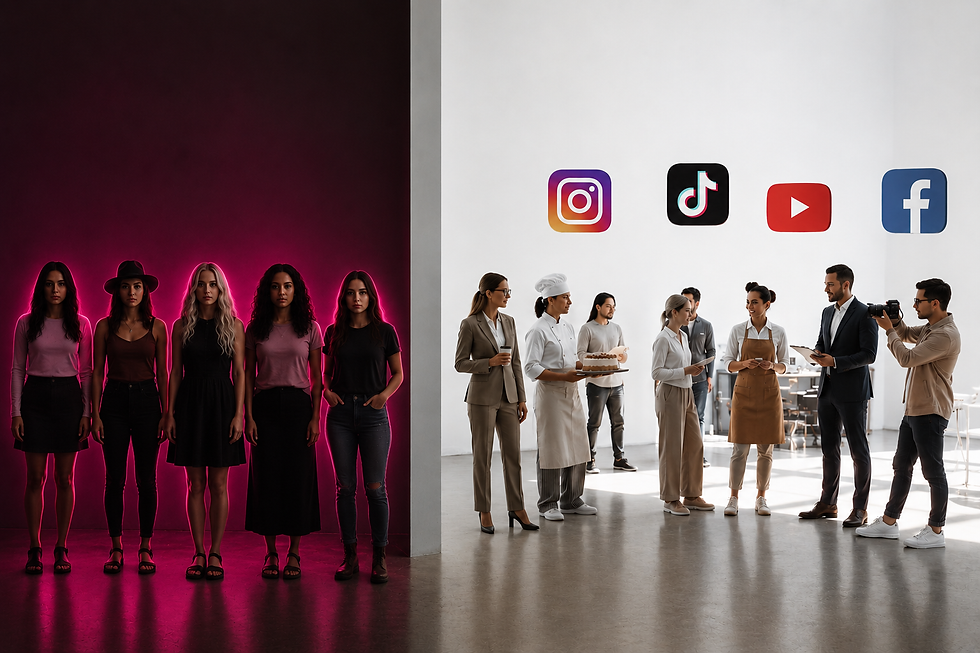
Imagine two women who are both 28 years old and have spent the past three years building independent digital media businesses. Both generate $100,000 in annual revenue, pay taxes, purchase production equipment, manage subscribers, market their services, and produce original intellectual property. One creates cooking videos and sells access to premium recipes and instructional content, while the other creates explicit adult entertainment and sells subscriptions to her original videos. From an operational perspective, these entrepreneurs have remarkably similar responsibilities, expenses, and business challenges.
Both women may want to purchase better equipment, expand their production capabilities, hire contractors, or invest in marketing to attract new customers. Both may have strong financial records, reliable revenue, and a reasonable business plan for growth, making them plausible candidates for financing from a conventional business perspective. Yet the nature of the second creator's content could place her business within an existing SBA lending exclusion, even if she otherwise meets the financial requirements. The difference isn't necessarily whether she operates a legitimate business, but whether her business activities fall within the government's eligibility rules.
I'm not suggesting that every entrepreneur should automatically qualify for government-backed financing, because lending decisions should absolutely consider financial risk, repayment capacity, and other legitimate requirements. But I do think we should be willing to question whether the content produced by two otherwise comparable businesses should determine their access to the same federally supported financing programs. That question becomes particularly interesting when both businesses operate legally, contribute to the economy, and pay taxes on the income they generate. And I believe the adult creator industry has every reason to participate in that conversation rather than simply accepting that it doesn't concern them.
"If we're going to recognize content creators as business owners, we should also be willing to examine which creators actually have access to the opportunities that come with owning a business."
Does Having an OnlyFans Account Automatically Disqualify You?
One of the biggest misconceptions surrounding OnlyFans is that everyone using the platform produces explicit adult entertainment, which simply isn't true. Some creators publish fitness programs, lifestyle content, educational material, and other forms of subscription-based media that don't necessarily fall within the SBA's sexually oriented business restrictions. Likewise, many businesses serving the broader adult industry operate in fields such as publishing, software development, photography, marketing, and education. The relevant question isn't necessarily which platform a business uses or which industry its customers belong to, but what the business actually does and how it generates revenue.
Consider a sexual wellness educator producing non-explicit instructional videos, a photographer working with adult creators, or a digital publisher reporting on the adult entertainment industry. Each business could raise different eligibility questions depending on its activities, the services it provides, and the revenue it receives. A creator earning income from both explicit subscriptions and non-explicit sponsorships may face an especially complicated analysis because SBA restrictions can consider the nature and sources of business revenue. These are precisely the kinds of distinctions that deserve clear, practical guidance rather than broad assumptions about everyone associated with adult platforms.
For that reason, I would strongly encourage creators not to assume that simply registering an LLC, changing their business description, or selecting a particular NAICS code automatically establishes eligibility for federal financing. Government lending programs examine the underlying business activities, and the classification assigned to a company does not eliminate restrictions that apply to those activities. Conversely, someone publishing non-explicit content shouldn't automatically assume they're excluded merely because they use a platform associated with adult entertainment. The appropriate approach is to understand the applicable rules, document the business accurately, and seek qualified guidance when eligibility is uncertain.

Meanwhile, the Platforms Are Making Millions and Billions
There's another part of this conversation that I think deserves considerably more attention, and it involves the companies that have built extraordinarily successful businesses around the creator economy. I'm talking about platforms like OnlyFans, Fansly, Fanvue, and the growing number of subscription services that earn revenue by providing creators with the technology to monetize their content. These companies have created valuable services, and I don't want to diminish the opportunities they've provided to people who might otherwise have struggled to earn money from their creative work. But I do believe we should be asking what responsibility comes with building a profitable business around an industry whose participants continue to face significant financial and regulatory barriers.
Consider the scale of OnlyFans alone, because the financial figures are remarkable by almost any business standard. According to reporting on its financial accounts for the year ending November 2025, the platform processed approximately $7.8 billion in fan payments, generated around $1.6 billion in company revenue, and reported approximately $715 million in pre-tax profit. The company has also paid billions of dollars to creators, demonstrating that substantial economic activity is taking place throughout its ecosystem. Those figures don't mean the platform itself earned every dollar spent by fans, but they certainly establish that we're discussing a major commercial enterprise rather than a small experimental website.
I haven't found similarly comprehensive, independently verified financial disclosures establishing the current revenue or profit of Fansly and Fanvue, so I won't pretend that all three companies operate at the same financial scale. Nevertheless, each participates in a business model that depends on creators producing content, attracting customers, and generating transactions. The platforms provide infrastructure and take an economic interest in the activity that takes place through their services, while creators shoulder much of the work involved in producing and marketing their content. That relationship raises an important question about whether supporting creators should extend beyond providing the technology necessary to collect subscription payments.
When a creator succeeds, the platform benefits, and when thousands or millions of creators participate, those benefits can become substantial. But what happens when the same creators encounter banking restrictions, difficulties obtaining financing, or government policies that treat their businesses differently from other forms of digital entertainment? Should the platforms benefiting from those creators' economic activity simply explain the rules and continue operating, or should they help bring attention to the policies affecting their communities? I believe the answer should involve a much more active commitment to creator rights, education, and representation.
Where Do OnlyFans, Fansly, and Fanvue Stand?
To be fair, it would be inaccurate to suggest that adult creator platforms have never addressed creator rights or the challenges facing their communities. OnlyFans CEO Keily Blair has publicly discussed banking discrimination, the importance of creator control, and the challenges of operating a business associated with adult content. Fansly has published guidance encouraging users to learn about age-verification legislation, contact lawmakers, and engage with advocacy resources, including those associated with the Free Speech Coalition. Fanvue has published policies addressing consent, safety, discrimination, and acceptable use, although those policies don't necessarily establish a position on federal small-business lending restrictions.
These are meaningful distinctions, and I think they should be acknowledged rather than overlooked. A platform discussing banking discrimination is not the same thing as remaining silent about the challenges facing its creators, and encouraging users to contact lawmakers is a form of civic engagement. At the same time, neither public statements about creator empowerment nor platform safety policies necessarily answer the specific questions raised by the SBA's October 15 announcement. In researching this article, I could not verify a public statement from OnlyFans, Fansly, or Fanvue specifically addressing whether adult creators should have access to SBA-backed financing under the newly clarified classification guidance.
That doesn't prove these companies are doing nothing behind the scenes, and I don't think it would be fair to make that accusation without evidence. They may be engaging policymakers, consulting industry organizations, or evaluating the announcement internally, and I would welcome information about any such efforts. But I do think the announcement presents an opportunity for these platforms to make their positions clear, particularly when the financial interests of their businesses are so closely connected to the livelihoods of their creators. If the companies building the creator economy believe their users are legitimate entrepreneurs, this seems like an appropriate moment to explain how they're supporting that principle.
I would genuinely like to hear from the leadership teams at OnlyFans, Fansly, Fanvue, and other creator platforms about where they stand on these issues. Do they believe lawful adult-content businesses should have access to the same federal lending opportunities as other eligible digital media businesses, subject to ordinary financial requirements? Are they working with industry associations or policymakers to clarify how the SBA's existing restrictions affect creators, and are they providing their users with reliable information about available resources? Those aren't accusations disguised as questions; they're questions I believe deserve public answers from businesses that have become influential participants in the creator economy.
Financial Discrimination Is Already Affecting Adult Creators
The concern isn't hypothetical, because the adult industry has been documenting problems with access to financial services for years. The Free Speech Coalition, working with Sex Work CEO, published research examining the experiences of performers, creators, industry professionals, and business owners who reported difficulties with banking and payment services. In a survey involving more than 600 adult-industry participants, nearly two-thirds reported losing access to a bank account or financial tool, while nearly 40% reported an account closure within the preceding year. Those figures describe the experiences of survey participants rather than a statistically representative estimate of every adult creator, but they illustrate the seriousness of the problem for people affected.
Think about what losing access to a bank account could mean for someone who earns their living through content creation. It can interfere with receiving payments, paying contractors, managing expenses, maintaining financial records, and conducting ordinary business transactions. And when someone already faces difficulties accessing basic financial services, the prospect of obtaining business financing can become even more complicated. These aren't abstract policy discussions for the people experiencing them; they can affect whether someone is able to operate a business at all.
OnlyFans itself provides an interesting historical example of how financial pressure can influence an entire creator ecosystem. In 2021, the company announced plans to prohibit sexually explicit content, citing pressures involving banking and payment partners, before suspending that proposed policy change. The episode demonstrated how decisions made by financial institutions could potentially affect large numbers of creators whose businesses depended on the platform. It also illustrated why creator rights, platform stability, and access to financial infrastructure are connected issues rather than entirely separate conversations.
I think it's important to recognize that reasonable safeguards, age verification, consent protections, and measures against illegal activity are legitimate responsibilities for businesses operating in this space. Supporting creator rights should never mean ignoring exploitation, coercion, trafficking, or other unlawful conduct, and the industry has a responsibility to address those issues seriously. But protecting people from abuse and treating lawful adult businesses fairly are not inherently contradictory objectives. In my view, a responsible creator economy should be capable of supporting both strong safety standards and meaningful economic opportunities for people operating within the law.
Supporting Creator Rights Should Be Part of the Business Model
Here's where I want to challenge the platforms themselves, because I believe there's a difference between making money from creators and helping creators build sustainable businesses. A company can provide excellent technology, process payments efficiently, and offer useful monetization tools while still leaving its users largely on their own when broader industry challenges arise. Those services have value, but they don't necessarily address access to banking, business education, government resources, or the long-term financial stability of the people generating the content. And when an entire business model depends on creator participation, I think it's reasonable to ask whether supporting those creators should be considered part of the company's broader responsibility.
Imagine what could happen if major creator platforms worked together to provide better information about financial services, business formation, and the regulations affecting their communities. They could help commission independent research, support credible industry organizations, explain proposed policy changes, and create educational resources that help creators understand their rights and responsibilities. They could also participate in transparent discussions with policymakers about how existing rules affect lawful businesses without suggesting that every applicant should automatically qualify for public financing. None of those efforts requires a platform to abandon its commercial interests, and several could ultimately support the long-term health of the ecosystem on which its business depends.
The SBA announcement is an excellent example of why this matters, because the average creator may never hear about it unless someone within the industry brings it to their attention. Even among those who see the headline, many may not understand what a NAICS classification means, what SBA-backed lending involves, or why existing adult-business restrictions remain relevant. This is where platforms, publishers, industry associations, and educators can play an important role by translating complicated policy developments into information people can actually use. I believe companies with substantial creator communities have an opportunity to help make that information accessible rather than assuming individual creators will discover it on their own.
And I don't think this responsibility belongs exclusively to subscription platforms, because the creator economy involves a much broader network of businesses. Payment processors, financial institutions, advertising companies, social networks, talent agencies, technology providers, and digital publishers all participate in an ecosystem that depends on people creating and distributing original content. Some of these companies have enormous financial resources and established relationships with policymakers, while individual creators may have neither. That difference in influence is precisely why I believe the companies benefiting from the industry should consider how they can help represent the interests of the people whose work sustains it.
We've Spent Too Long Confusing Content Creation With Entrepreneurship
What interests me most about this announcement isn't actually the lending programs or the government classifications, although both deserve attention. It's the larger question of how we've built an economy that encourages people to become content creators without necessarily teaching them how to become successful business owners. Somewhere along the way, we started treating the ability to create content as though it were interchangeable with the ability to operate a profitable business. And those are two very different skill sets.
Being a talented photographer doesn't automatically make someone an effective marketer, just as being comfortable in front of a camera doesn't mean someone understands customer acquisition or cash flow. Having 100,000 followers doesn't necessarily mean a creator understands pricing, customer retention, operating margins, or financial planning. Someone can generate millions of impressions, spend hours producing content, and still struggle to create reliable income after accounting for their expenses. Yet our industry continues to celebrate visibility and engagement as though those measurements automatically translate into financial success.
Think about how we introduce people to the creator economy, particularly when someone is looking for an opportunity to earn additional income. We tell them they can make money doing something they enjoy, show them examples of extraordinarily successful creators, and encourage them to open accounts and start publishing. What we don't always explain is how difficult it can be to acquire customers, build recurring revenue, manage expenses, and compete in an increasingly crowded marketplace. We give people access to tools for creating content, call them entrepreneurs, and often leave them to figure out the business side on their own.
I believe that disconnect is one of the most important challenges facing the creator economy, because the real opportunity isn't simply helping more people publish more content. It's helping people develop the knowledge, relationships, infrastructure, and business strategies necessary to make their creative work financially sustainable. A creator who understands customer acquisition, marketing, pricing, and business development is in a fundamentally different position from someone who relies entirely on an algorithm to deliver their next subscriber. And if we're going to celebrate the recognition of creators as small-business owners, I think we should be equally enthusiastic about helping them understand what running a business actually involves.

A Million Followers Won't Teach You How to Run a Business
One of the most misleading ideas in social media is that audience size automatically equals business success, because an audience and a profitable business are not the same thing. Someone can have a million followers and still struggle to generate enough income to support themselves, while another creator with a much smaller audience may operate a sustainable business with loyal paying customers. The difference often comes down to understanding who those customers are, what they're willing to pay for, and how to maintain those relationships over time. None of those skills necessarily comes from knowing how to create a viral video.
There's another challenge that I think deserves more attention, particularly among creators whose livelihoods depend on platforms they don't control. A creator can spend years building an audience, generating content, and developing a recognizable brand, only to discover that a policy change, account restriction, or algorithm adjustment has significantly reduced their ability to reach those followers. When your entire customer acquisition strategy depends on someone else's platform, you're effectively allowing another company to influence how your business communicates with its customers. That's a substantial business risk, and it's one that I believe creators should understand long before something goes wrong.
This is one of the reasons I launched Sxgram, a social networking platform designed to provide another option for adults operating legal businesses, particularly those who have struggled with restrictions on mainstream social platforms. But I don't believe simply giving creators another place to publish solves the underlying challenges of running a business. That's why I've been developing an ecosystem that connects social networking with digital publishing, podcasting, professional relationships, and opportunities for business discovery. My objective isn't to promise that every creator will become successful, but to help create more ways for people to build relationships and pursue opportunities beyond a single platform.
What Should You Actually Do With This Information?
If you're reading this and wondering whether the SBA announcement could affect you personally, I would encourage you to begin by looking at your own activities from a business perspective. Are you generating revenue from subscriptions, content sales, sponsorships, advertising, products, or services, and do you understand which activities account for that income? Are you tracking your expenses, keeping appropriate financial records, and understanding how much money you're actually earning after the costs of operating your business? These may sound like basic questions, but they're fundamental to understanding whether you're running a sustainable enterprise.
The next step is to understand how your business is classified and which resources might be relevant to its activities, because not every creator business belongs within the same NAICS category. The SBA's website provides information about business planning, financing, counseling, and other resources that entrepreneurs can explore, subject to applicable eligibility requirements. If you're considering borrowing money, you should also understand how lenders evaluate applications, what documentation they require, and whether your business can reasonably support repayment. Financing can be useful when it supports a sound business strategy, but borrowing money without understanding the obligations involved can create more problems than it solves.
For adult creators, I would add another important consideration: don't assume the October 15 announcement automatically makes you eligible for SBA-backed loans. Existing restrictions on certain sexually oriented businesses remain relevant, and determining whether they apply can require a careful examination of your actual business activities and revenue. If you're uncertain, speak with an experienced SBA lender or qualified professional who understands the applicable rules before making financial commitments or paying anyone to prepare an application. And be particularly skeptical of anyone claiming that the government is now handing out guaranteed funding to OnlyFans creators simply because of this announcement.
There's Another Important Date Coming
The SBA is also considering changes to its small-business size standards, including discussion of a possible industry exception for content creators. The public comment period is scheduled to close on November 20, 2026, giving interested parties an opportunity to participate in the ongoing classification discussion. This is a separate matter from the existing restrictions on certain sexually oriented businesses, and submitting comments about creator classifications does not automatically initiate a change to those lending exclusions. Nevertheless, I believe it's an opportunity for creator-industry organizations and entrepreneurs to pay closer attention to how federal policies recognize and categorize modern digital businesses.
I would particularly like to see more clarity around businesses that operate at the intersection of entertainment, education, technology, publishing, and adult-oriented services. The creator economy is no longer a simple collection of people making videos, and many businesses now generate revenue through combinations of subscriptions, sponsorships, affiliate programs, digital products, and professional services. Those business models don't always fit neatly into the assumptions people make about traditional media companies or adult entertainment businesses. If policymakers want their guidance to reflect the realities of modern entrepreneurship, these distinctions deserve serious consideration.
A Call to the Platforms, Policymakers, and Everyone Profiting From the Creator Economy
I want to make something clear about where I stand, both personally and as the founder of Sxgram and Editor-in-Chief of Only Fans Insider Magazine. I believe that people operating lawful businesses deserve to be taken seriously as entrepreneurs, even when their work involves subject matter that others may find controversial. That doesn't mean every business should receive public financing, and it doesn't mean reasonable safety regulations should disappear. It means we should be willing to examine whether existing rules are fair, understandable, and appropriate for the businesses they affect.
I also believe that creator rights should be a concern for everyone participating in the creator economy, not simply the people producing the content. If a platform earns revenue from creators, I think it should care whether those creators can access banking, understand business regulations, protect their intellectual property, and operate without arbitrary discrimination. If a technology company builds products specifically for adult entrepreneurs, I think it should pay attention when government policies affect the financial opportunities available to those entrepreneurs. And if an industry generates billions of dollars in economic activity, I think its participants deserve an informed public conversation about the policies shaping their livelihoods.
That includes the politicians and public officials responsible for examining and administering those policies, because the questions raised by this announcement deserve serious consideration regardless of political affiliation. The issue isn't whether someone personally approves of adult entertainment or would choose to participate in it themselves. The issue is how government programs should treat businesses that operate legally, contribute to the economy, and meet ordinary financial and regulatory responsibilities. Policymakers can reasonably disagree about the proper scope of federal lending programs while still recognizing the importance of clear rules, consistent administration, and opportunities for affected entrepreneurs to be heard.
I would welcome a broader conversation involving OnlyFans, Fansly, Fanvue, other creator platforms, financial institutions, industry organizations, and elected officials about what supporting all content creator rights should actually mean. That conversation should include access to financial services, business education, transparent platform policies, lawful expression, privacy, safety, and the ability to develop sustainable businesses. It should also include honest discussion of the obligations creators and platforms have to prevent exploitation, protect consent, and comply with applicable laws. These are not mutually exclusive goals, and I believe the industry would be stronger if we approached them as connected responsibilities.
From My Desk: Recognition Is Nice. Opportunity Is Better.
I've spent years working with entrepreneurs, developing digital publications, and building platforms intended to help people promote their businesses. And throughout that experience, I've become increasingly convinced that people don't necessarily need another person telling them they're entrepreneurs; they need access to information, relationships, and opportunities that can help them become better business owners. They need to understand how to reach customers, manage revenue, develop partnerships, and create something sustainable enough to support their lives. Most importantly, they need to recognize that the value of their business shouldn't be measured exclusively by the number of people following them online.
That's why I think this week's SBA announcement is worth paying attention to, even if the average creator has never heard of the agency before. It doesn't solve the financial challenges facing the creator economy, guarantee access to loans, or eliminate the restrictions affecting certain adult-oriented businesses. What it does provide is an opportunity to discuss the relationship between content creation and entrepreneurship in a way that goes beyond social media engagement. And for an industry that has spent so much time celebrating creators' ability to generate attention, I think that's a conversation we're overdue to have.
"A creator isn't successful simply because someone gave them the title of entrepreneur. They're successful when they've built a business that actually works."
I also hope this announcement encourages policymakers to examine the entrepreneurs who operate legal businesses but may remain excluded from certain federal opportunities because of the nature of their content. Whether those restrictions should change is a policy question, but understanding how they affect real businesses should be part of the conversation. Adult creators deserve accurate information about which opportunities exist, which restrictions apply, and what alternatives they may need to consider. And I believe the adult creator economy itself has a responsibility to help its participants understand those realities rather than simply repeating optimistic headlines.
For me, the most important takeaway isn't that the government has discovered content creators or that millions of people suddenly qualify for financial assistance. It's that an enormous number of people are participating in an economy built around original content, personal brands, and digital relationships without necessarily understanding the broader business infrastructure around them. Some may discover resources they never knew existed, while others may learn that their particular business activities remain subject to restrictions they weren't aware of. Either way, knowledge is valuable, and I think creators deserve to understand the systems that can influence their opportunities.
And I believe that responsibility extends to the companies making money from those creators, because building a successful platform should involve more than providing a place to upload content and collect payments. At Only Fans Insider Magazine, we're committed to giving creators and industry professionals opportunities to share their experiences, explain their businesses, and participate in conversations that affect their futures. At Sxgram, we're building an environment intended to support legal adult businesses through social networking, publishing, professional connections, and opportunities for discovery. These are different approaches to the same underlying belief: the creator economy should be built around helping creators succeed, not simply benefiting from the content they produce.
So if you've been earning money through content creation, perhaps it's time to ask yourself a question that goes beyond how many followers you have or how much engagement your latest post received. Do you understand the business you're building, the resources that may be available to you, and the decisions that could determine whether that business is still operating five years from now? Because the creator economy doesn't simply need more people creating content; it needs more people who understand how to build businesses that last. And maybe that's the real opportunity behind this week's announcement.
You might have started as a content creator, but you may already be a small-business owner. Isn't it time you started learning what that actually means?
— Joseph Haecker
Founding Editor-in-Chief
Only Fans Insider Magazine
and founder of Sxgram, social media for adults

Sources and further reading
U.S. Small Business Administration — October 15, 2026 Announcementhttps://legacy.sba.gov/article/2026/10/15/sba-issues-historic-guidance-recognize-americas-content-creator-economy
U.S. Small Business Administration — Official Websitehttps://www.sba.gov
SBA 7(a) Loan Programhttps://www.sba.gov/funding-programs/loans/7a-loan-program
SBA Microloan Programhttps://www.sba.gov/funding-programs/loans/microloans
13 CFR § 120.110 — Businesses Ineligible for SBA Business Loanshttps://www.ecfr.gov/current/title-13/section-120.110
Financial Times — OnlyFans Financial Performance and Creator Economyhttps://www.ft.com/content/8472a7c3-64bb-4526-9aea-9c98c1af0e2a
Financial Times — OnlyFans CEO Keily Blair on Banking and the Adult Industryhttps://www.ft.com/content/9411ba40-31a9-4f02-b255-bd52c60816a5
Free Speech Coalition — Financial Discrimination and the Adult Industryhttps://www.freespeechcoalition.com/banks
Fansly — U.S. Age Verification and Legislative Advocacyhttps://help.fansly.com/en/articles/12871972-u-s-age-verification-requirement
Fanvue — Community Guidelineshttps://legal.fanvue.com/community-guidelines
Only Fans Insider Magazinehttps://www.onlyfansinsider.com
Sxgram — Social Media for Adultshttps://www.sxgram.com
_____
Editor's note: This article reflects the author's opinions and is intended for educational purposes. It does not constitute legal or financial advice. Eligibility for SBA-backed financing depends on individual business activities, applicable federal regulations, program requirements, and lender approval. The October 15, 2026 announcement does not guarantee financing or eliminate existing restrictions affecting certain sexually oriented businesses. Public statements and policies referenced in this article were reviewed as of October 17, 2026; the absence of a verified statement on the specific SBA announcement should not be interpreted as proof that a company has taken no related action.




Comments