


Spicy Content Creator Personal Brand Building for Dummies

The difference between a creator making $50 a week and one building a $100,000-a-week business isn’t about how spicy the content is.
Here’s something the creator economy doesn’t talk about enough. Two creators can be equally attractive, own the same camera, use the same lighting, post on the same platforms, and work equally hard. One might struggle to make $50 this week, while another has built a business capable of producing $100,000 weeks.
It would be easy to say the second creator simply has more followers, makes better content, knows more people, or got lucky with the algorithm. Sometimes those things absolutely matter. But underneath those differences is something far more important: personal brand.
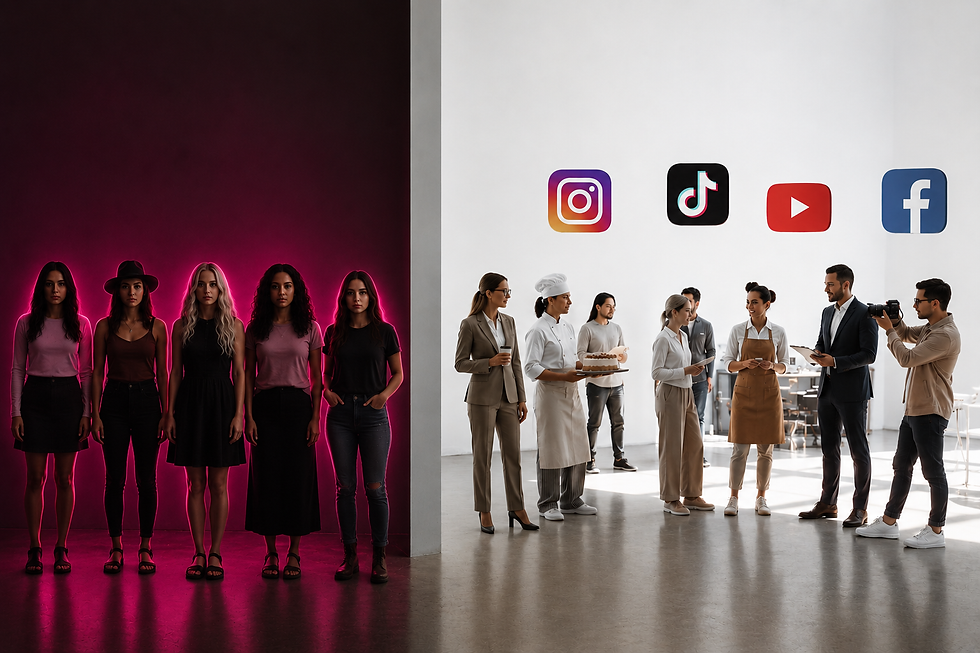
The $50-a-week creator is often trying to sell content. The $100,000-a-week creator has figured out how to create demand for the person behind the content. Those are two very different businesses, and understanding that distinction can completely change the way you approach your career.
To be clear, there is no personal-brand formula that guarantees $100,000 weeks—or any particular level of income. The numbers are intentionally extreme because they illustrate a larger point. At some point, the most successful creators stop thinking exclusively about what today's content is worth and start thinking about what their name could eventually be worth.

Your Content Is Not Your Brand
This is probably the most important distinction in this entire article. Your photos are content, your videos are content, your livestreams are content, your social posts are content, and even that Reel that unexpectedly gets 3.7 million views is content. You are the brand.
That distinction becomes incredibly important in an industry where almost everything can eventually be copied. Someone can recreate your pose, buy a similar outfit, use the same trending audio, shoot in the same hotel, imitate your caption format, and even experiment with your pricing strategy. But no matter how hard they try, they cannot actually become you.
The problem is that many creators spend nearly all of their energy producing things that can be copied while spending almost no time developing the one thing competitors can never duplicate. They obsess over today's post while barely thinking about the identity connecting thousands of those posts together.
Personal branding is the process of making that identity valuable.
The $50-a-Week Creator Problem
Imagine a new creator starting from scratch. She creates an account, takes some photos, launches a subscription page, posts on Instagram, tries X, experiments with Reddit, starts answering DMs, and waits for the money to arrive. Then the advice starts pouring in.
Someone tells her she needs to post three times a day. Someone else says five, another person insists she needs more Reels, and somebody else tells her collaborations are the secret. Before long she apparently needs Instagram, TikTok, X, Reddit, Snapchat, Telegram, livestreams, a Linktree, daily engagement, constant DMs, trending audio, perfect hashtags, and a posting schedule synchronized with whatever the algorithm supposedly wants this week.
Suddenly, she has created a full-time job promoting the full-time job she created for herself. She's constantly busy, but she doesn't necessarily know which activity is actually moving her business forward. Every time something isn't working, the answer she receives is essentially the same: do more.
Post more, promote more, DM more, collaborate more, create more, and be on more platforms. If that doesn't work, apparently the solution is to do even more of the things that aren't working. That's not always a marketing strategy; sometimes it's just exhaustion with Wi-Fi.
The $100,000-a-Week Creator Plays a Different Game
Now imagine another creator whose name people recognize before they even see the latest post. They recognize her look, understand her personality, know what she represents, and probably have an opinion about her. Her audience doesn't simply recognize individual pieces of content; they recognize her.
She has a recognizable visual identity, a story people understand, recurring themes, inside jokes with her audience, and perhaps interviews, podcasts, magazine articles, event appearances, or collaborations that reinforce who she is. Other creators want to work with her, brands understand her audience, and fans are interested in what she does next. She has graduated from being another account in the feed to becoming someone people actively look for.
That means she can introduce something new and receive attention because she introduced it. It might be a subscription, product, appearance, podcast, collaboration, merchandise line, event, or entirely new company. Her name begins transferring attention from one opportunity to another.
That's leverage, and leverage is where creator economics start becoming really interesting. Instead of every dollar requiring another hour of labor, parts of the brand begin working without her direct involvement. Her reputation starts doing some of the selling before she ever enters the room.
Being Hot Isn't a Brand
Let's get an uncomfortable one out of the way. Being attractive can absolutely be an advantage in this industry, and there is nothing wrong with using that advantage. But "hot" is a category, not a personal brand.
There are millions of attractive people on the internet. Open Instagram, TikTok, X, or virtually any creator platform and start scrolling. If your entire market position is essentially, "I'm attractive and I make spicy content," you've entered an extraordinarily competitive category without giving the customer much reason to remember you specifically.
A much more interesting question is: What makes you interesting when you're fully dressed? Maybe you're a gamer, entrepreneur, athlete, mother, traveler, comedian, cosplayer, motorcycle enthusiast, pinup model, fitness fanatic, musician, former corporate executive, or gigantic horror-movie nerd. Those things aren't distractions from your brand; they may be the ingredients that finally make your brand recognizable.
Sexy may get somebody through the door, but personality can give them a reason to remember which door they walked through. Attraction might generate the first click, while identity creates the second, tenth, and hundredth. The goal isn't simply getting someone interested in what you're wearing—or not wearing—today; it's getting them interested in what you do next.
Give People a Sentence
Here's a simple personal-brand exercise. Ask five people who genuinely follow your work to describe you in one sentence without describing your physical appearance. Their answers may tell you more about your current brand than your follower count ever could.
Ideally, there should be some overlap. You want people to immediately associate your name with a personality, story, aesthetic, niche, perspective, lifestyle, or point of view. When someone hears your username, the goal is eventually to trigger a sentence that begins, "Oh! She's the creator who..."
If nobody can finish that sentence, you haven't necessarily failed. It simply means your positioning isn't clear enough yet. Your job is figuring out what you want the sentence to become and consistently giving people evidence that reinforces it.
Great brands occupy mental real estate. They give people a convenient way to remember, categorize, describe, and recommend them to someone else. If you can't easily explain why someone should remember you, expecting the audience to figure it out for you is a difficult strategy.
Build a Character Without Becoming Fake
This is where people sometimes misunderstand personal branding. Building a recognizable identity does not mean manufacturing a fake personality or turning yourself into a character you have to perform every waking hour. In fact, the opposite approach is usually more sustainable.
Find the parts of your actual personality that are interesting and turn up the volume. If you're naturally glamorous, embrace it; if you're sarcastic, use it; if you're geeky, wonderful; if you're naturally sweet, dominant, adventurous, sophisticated, eccentric, ambitious, or hilariously awkward, give those characteristics room to breathe. Authenticity doesn't mean showing every part of yourself equally.
Think of personal branding as editing for clarity. Human beings are wonderfully complicated, while memorable brands give audiences recognizable patterns. You're not inventing someone new; you're helping people understand the most interesting parts of the person already there.
This also makes content easier to create. Instead of waking up every morning wondering what random thing might perform today, you have themes, perspectives, visual language, stories, and personality traits to draw from. Your brand becomes a creative filter rather than another task on your checklist.

Stop Selling for Five Minutes and Tell Me a Story
This might sound strange coming from Only Fans Insider Magazine, but stick with me. If every communication from you says some version of "buy, subscribe, watch, tip, click, new drop, sale, subscribe," your audience eventually learns something about you. Unfortunately, what they learn is primarily that you're always selling something.
Now compare that with, "You will not believe what happened during today's shoot," or, "Three years ago I almost quit." Imagine telling people, "Nobody knows this about me," "Here's what people misunderstand about my job," or "I spent four hours preparing for a shoot that lasted 22 minutes." Suddenly, we have something far more powerful than another promotion: narrative.
People have followed stories for thousands of years. Long before Instagram, OnlyFans, television, magazines, radio, or the internet, humans wanted to know who someone was, what happened to them, what they wanted, what stood in their way, and what happened next. Your creator business exists inside exactly the same human psychology.
Your content can show people what you look like. Your story helps people understand who you are, where you've been, and where you're going. Once people become emotionally invested in that journey, you are no longer simply filling a content feed.
Give Your Audience Somewhere to Go With You
A compelling personal brand has movement. There should be another chapter coming, another milestone you're pursuing, another transformation happening, or something you're trying to build. Give your audience an opportunity to watch that journey unfold.
Maybe you're trying to become a mainstream model, launch a fashion company, win an award, travel around the world, start a podcast, enter a fitness competition, build a studio, become an actress, create a product, or dominate a particular creator niche. Whatever the goal is, bring people along. Let the audience feel like they discovered you before everyone else did.
Now your milestones mean something. Your first magazine feature matters, your first 100,000 followers matter, your first product matters, your first convention matters, and your first cover matters. The audience remembers when those things didn't exist because they watched you build them.
That's how spectators begin becoming a community. They're no longer simply waiting for another post; they're following an unfolding story. They want to know what happens next.
Stop Worshipping Followers
Follower counts are useful, reach matters, and virality can be extraordinarily powerful. But attention by itself isn't a business, and a viral post that nobody associates with your name can be surprisingly worthless. Ten million views aren't nearly as interesting if ten million people immediately forget who created the thing they watched.
Creators frequently ask, "How do I go viral?" That's understandable, but there is a more valuable question: "If this goes viral, how will people remember that it was me?" That question forces you to think beyond the individual post.
Would you rather have one million people vaguely recognize something you made or 50,000 people know exactly who you are? There isn't one universal answer, because reach and depth serve different purposes. But the creator building a long-term business needs to understand the difference between audience size and audience attachment.
Virality gets attention. Personal branding helps capture some of that attention and attach it to a recognizable identity. The objective isn't merely to win the algorithm today; it's to leave with something valuable after the algorithm moves on tomorrow.
Make Google Part of Your Personal Brand
Here's another uncomfortable exercise: Google yourself. Search your creator name and see what appears beyond profiles you created yourself. Imagine you're a company, journalist, podcast host, event organizer, or creator considering a collaboration with you.
What would they discover? Would they find interviews, magazine articles, podcasts, event appearances, awards, collaborations, expert commentary, and stories that help them understand who you are? Or would they find three social profiles, a subscription link, and a random Reddit thread from 2023?
Social media can demonstrate popularity. Independent media can add context, credibility, discoverability, and documentation around your story. Those are different assets, and strong personal brands can benefit from both.
That's why creators should think about their searchable footprint as part of their business. Your Instagram profile tells someone what you're doing this afternoon, while an interview might explain how you built your career over five years. One captures a moment; the other helps document a story.
Press Hits Different
There's a psychological difference between saying, "I'm amazing," and someone else deciding you're interesting enough to interview. That's one reason editorial coverage can play such a valuable role in personal-brand building. It creates another layer around the identity you've been developing yourself.
A magazine feature can also do something that a disappearing Story or fast-moving Reel rarely does. It documents where you were, what you believed, what you were building, what you overcame, and what you hoped would happen next. Years later, that piece can still be part of the searchable record of your career.
That doesn't mean every piece of press automatically creates authority, nor does appearing in a publication magically create a successful business. The value comes from how media fits into the broader ecosystem you're building. Your social channels, collaborations, audience, website, search results, interviews, and reputation can reinforce one another.
Think of your social profile as your stage. Press is someone else handing you a microphone and asking you to explain why the audience should care. Used strategically, the two can become much more powerful together.
Don't Build Your Mansion on Somebody Else's Property
Creators sometimes say, "I built my business on Instagram." Not exactly. You built an audience using Instagram's infrastructure, and that distinction becomes painfully clear the moment an algorithm changes, a feature disappears, reach drops, or an account is suspended.
The same principle applies to TikTok, X, Reddit, OnlyFans, YouTube, Facebook, and almost every other platform. These platforms can be incredibly valuable for distribution, discovery, community, and monetization. Use them aggressively when they make sense, but understand that you don't control the property.
Build assets capable of traveling with you. Your recognizable name, reputation, website, customer relationships, email list, intellectual property, media coverage, search presence, network, and community don't all depend on a single algorithm. The stronger those assets become, the less terrifying a platform change becomes.
A platform should ideally be a doorway into your brand, not the entire house. If one doorway suddenly closes, people who care about you should know how to find another entrance. Platforms come and go; powerful personal brands can walk across platforms.
Don't Be Everywhere. Be Unmistakable Somewhere.
There is no trophy for being exhausted on the greatest number of platforms. You do not necessarily need to dominate Instagram, TikTok, X, Reddit, Snapchat, YouTube, Threads, Facebook, every subscription platform, and whatever social app launched approximately seventeen minutes ago. More distribution can be valuable, but more activity isn't automatically more strategy.
You need to understand where your audience lives, what each platform contributes to your business, and whether your time there generates meaningful returns. Sometimes doing three things extraordinarily well beats doing thirteen things badly. Your energy is a business resource, and it should be allocated like one.
This becomes especially important as your personal brand grows. Every hour spent maintaining a channel with negligible returns is an hour you aren't spending developing something with greater leverage. Busy and productive are not synonyms.
Ask what each platform is supposed to accomplish. Maybe one creates awareness, another develops relationships, another monetizes, another establishes credibility, and another gives you direct access to your community. Give every platform a job.
Make Your Time Worth More
This is where the difference between grinding and brand building becomes much easier to see. If every dollar requires another direct action from you—another custom request, another DM, another promotion, another post, another hour—you eventually encounter a mathematical problem. There are only so many hours available.
A strong personal brand can create leverage because your reputation starts working when you aren't. Someone discovers an interview from six months ago, another creator recommends you, a podcast introduces you to 20,000 people, a magazine article appears in search, a fan shares your story, or an event organizer recognizes your name. Opportunities can begin moving toward you rather than requiring you to chase every single one.
That's when you can start asking a better business question. Instead of, "How can I work more?" ask, "How can an hour of my time become worth more?" The second question leads to very different decisions.
Personal branding is ultimately about creating accumulated value. Every story, relationship, collaboration, media appearance, piece of intellectual property, and audience connection can add another layer. You're building something that ideally becomes more valuable over time rather than resetting to zero every morning.
Stop Chasing Butterflies. Build the Garden.
In a recent Only Fans Insider interview, creator Lex Valentino used a metaphor I love. You can run around trying to catch butterflies with a net, or you can build a garden that attracts them. That idea applies beautifully to personal branding.
Early in your career, you're probably carrying the net. You're introducing yourself, chasing opportunities, asking for collaborations, promoting your work, and doing whatever you can to get noticed. There's nothing inherently wrong with that; almost everyone starts there.
But eventually, you should begin planting the garden. Your body of work, reputation, audience, relationships, media coverage, authority, recognizable aesthetic, personality, expertise, and story all become pieces of that garden. Over time, those assets can make people increasingly interested in coming to you.
That's the transition creators should be working toward. You may never completely put the net away, and successful people still pursue opportunities. But it feels very different when you're no longer doing all of the chasing.
Build Something Bigger Than "Creator"
Imagine your primary platform disappears tonight. Tomorrow morning, what are you? If the answer is, "I don't know," you've just identified one of the biggest vulnerabilities in your business.
Now imagine your answer includes entrepreneur, model, personality, athlete, host, author, educator, comedian, designer, speaker, entertainer, business owner, influencer, or creator. Suddenly there are multiple ways for the market to understand you. More importantly, there are multiple directions your career can travel.
You can absolutely be a spicy content creator without making that the outer boundary of your identity. OnlyFans can be an important part of your business without becoming the complete definition of who you are. Your current content category can be a chapter without having to become the entire book.
The strongest personal brands create optionality. They give you permission to evolve without forcing you to start over every time your interests, audience, industry, or opportunities change. Build a name capable of carrying whatever you decide to do next.
Become Famous for Something Before Trying to Become Famous
The word "famous" makes people think about celebrity, but that's not necessarily what I'm talking about. Start smaller and more strategically. Become known by the right community for something specific.
Become known for a perspective, visual style, personality, niche, skill, story, or area of expertise. Become the creator people think of when a particular conversation comes up. Eventually, you want someone in your industry to say, "We should ask her."
That's how authority begins. Not with everybody knowing your name, but with the right people knowing exactly why your name matters. From there, the circles can expand.
You don't need to become internet famous tomorrow. You need to become memorable today. That's a far more achievable—and often far more valuable—place to start.
The Personal Brand Flywheel
When this starts working, something interesting happens. You create something worth noticing, someone discovers it, they visit your profile, and your recognizable brand gives them a reason to follow. Over time they learn your story, become invested, and share something with another person.
Then someone else discovers you. A publication notices your story and interviews you, you share the interview, your audience shares it, search engines index it, and perhaps a brand, event organizer, podcast host, or collaborator finds you through that coverage. One opportunity creates the conditions for another.
Your reputation grows, and your next project launches with a larger audience already paying attention. That creates another story, which creates another opportunity, which attracts another audience. Around and around the flywheel goes.
Compare that with the alternative: post, beg for engagement, post again, beg for engagement again, repeat forever. One is a treadmill that requires constant energy just to remain in place. The other has the potential to become an asset.
So, What's Really Separating the $50-a-Week Creator From the $100,000-a-Week Creator?
Obviously, it isn't one magic trick. Personal branding alone does not guarantee that a creator making $50 this week will suddenly build a $100,000-a-week business, and anyone promising that probably belongs in the "fake guru" category you're trying to avoid. Audience, product, pricing, execution, timing, distribution, market demand, relationships, and plenty of other factors matter.
But there is an important principle hiding inside that intentionally extreme comparison. The $50 creator is often focused almost exclusively on monetizing today's content. The creator building a much larger business is more likely to understand how to monetize an ecosystem of attention, identity, reputation, community, distribution, and demand.
One wakes up asking, "What should I post today?" The other can still care deeply about today's post, but they're also asking, "What am I becoming known for?" That second question changes what you create, where you spend your time, who you collaborate with, which opportunities you accept, and what you say no to.
That's personal-brand building. Once you understand the difference, content stops being the entire business. Content becomes one of the tools used to build the business.
Maybe You Don't Need to Work Harder
Maybe you're already making money. Maybe you're posting constantly, promoting everywhere, answering DMs at midnight, chasing trends, experimenting with every new platform, and following every piece of growth-hack advice someone throws at you. Maybe you're doing everything you're supposedly supposed to do and still feel like you're running harder without getting much further.
The answer isn't automatically another platform, another posting schedule, another guru, another funnel, another 30-day growth hack, or another twelve hours staring at your phone. Sometimes the smartest thing you can do is stop optimizing individual posts long enough to examine the person all those posts are supposed to be building.
What do you want to be known for? What makes you different, who is your audience, what is your story, where are you going, and which parts of your current workload actually move you toward that destination? Just as importantly, what should you stop doing?
Those are personal-brand questions. And if you're already working hard, answering them may be substantially more valuable than simply adding more work. The goal isn't necessarily to work less tomorrow; it's to build toward a future where your work carries more leverage.
You Know How to Make Content. Now Let's Build Your Name.
I'm Joseph Haecker, Editor-in-Chief of Only Fans Insider Magazine. Through the magazine, I've had the opportunity to look behind the curtain at hundreds of creator stories—not simply what people post, but how creators position themselves, communicate their stories, build recognition, navigate setbacks, and turn attention into something bigger.
That's the perspective I bring to personal-brand coaching. I'm not offering to become your manager, run your DMs, operate your agency, or promise that I can manufacture virality. And I'm definitely not interested in telling an already exhausted creator that the secret to success is simply posting six more times tomorrow.
I want to help creators step back and figure out what they're actually building. That means looking at positioning, story, differentiation, media presence, opportunities, audience, strategy, and how all of those pieces can work together to create a personal brand that becomes more valuable over time.
Most importantly, I want to help answer a question I believe more creators should be asking: How do I make my time worth more instead of simply selling more of my time? Because you may already know how to create content. The next step is building the person people remember after they've seen it.
Stop building another post. Start building your name.
Learn More at:



Comments