

No Social Platform Should Have This Much Control Over Your Business
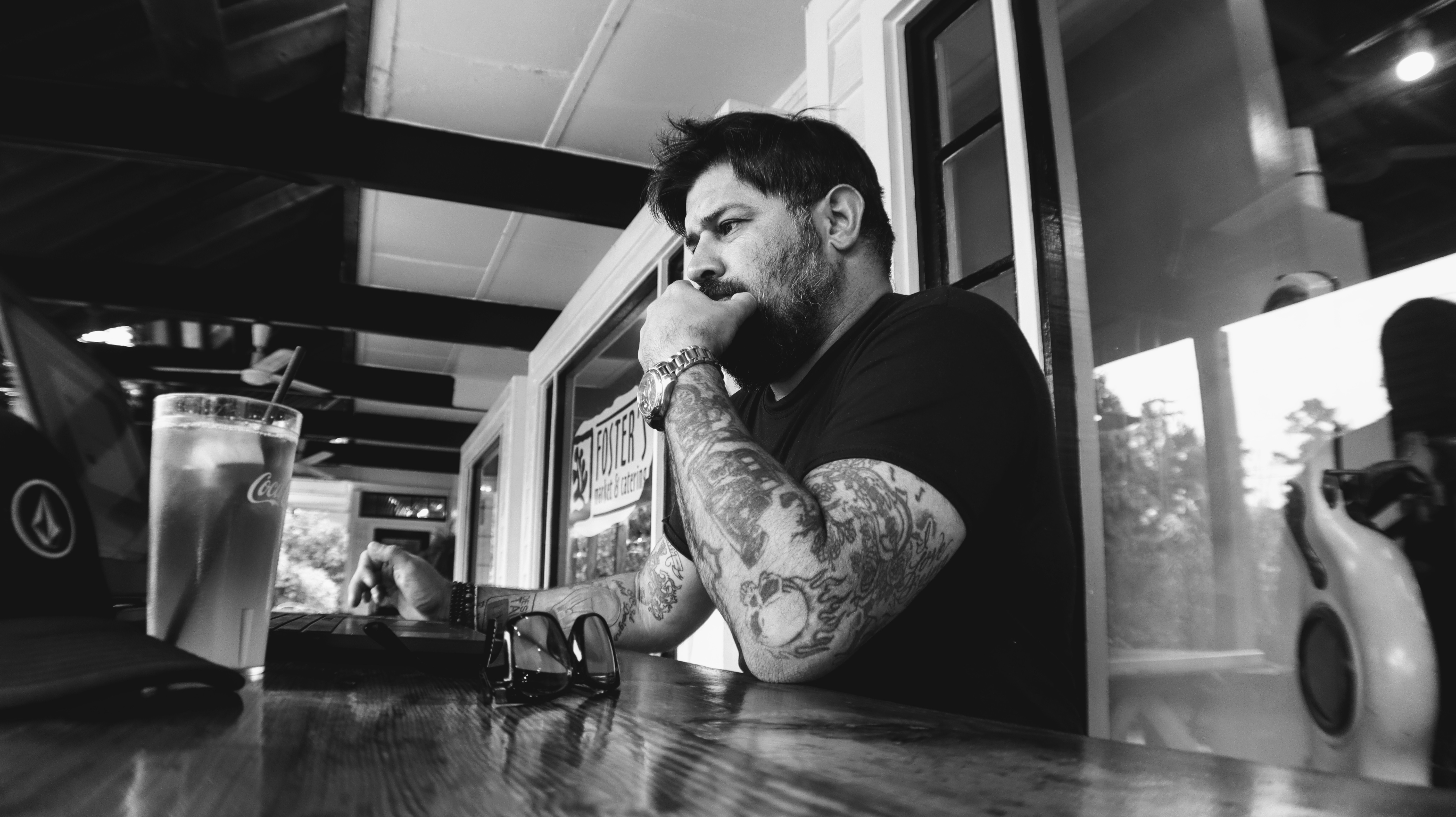

META OWNS THE PLATFORMS. YOU BUILD THE BUSINESS. THEY CAN PULL THE PLUG.
Instagram just disabled Only Fans Insider Magazine's account. No specific explanation. No further appeal. And one corporation controls several of the world's most important platforms for reaching customers. This isn't just an adult creator problem. It's a warning to every entrepreneur who has mistaken access to an audience for ownership of a business.
By Joseph Haecker | Founder of Sxgram & Founding Editor-in-Chief of Only Fans Insider Magazine
_____
Every Adult Content Business Owner Should Be Paying Attention
I'm angry. Not because Instagram owes me followers, not because I believe my businesses deserve special treatment, and certainly not because I think social media should operate without rules. I'm angry because we've allowed a handful of corporations to become gatekeepers to the digital economy, and now we're supposed to act surprised when they exercise that power over the businesses we've spent years building.
Instagram recently disabled the account belonging to Only Fans Insider Magazine, the digital publication I founded to cover the people and businesses shaping the adult creator economy. The notification said our account or activity violated Instagram's Community Standards, but it didn't identify the specific content or conduct responsible. It informed us that our account could no longer be found, that our information would be permanently deleted, and that we could not request another review. That was the explanation we received for losing access to an established business account.
Think about how absurd that is from a business owner's perspective. Imagine leasing commercial space, investing in your storefront, developing customer relationships, and then arriving one morning to discover that the property owner has locked the doors. You receive a notice saying you violated the rules, but nobody identifies which rule, what you did, or how you can challenge the decision. You would be furious, and you would have every reason to question the fairness of that arrangement.
Now imagine the company controlling your storefront also controls several of the other major places where your customers spend their time. Imagine being told that your solution is simply to build another audience somewhere else, even though the same corporation operates multiple channels you might otherwise consider alternatives. Imagine having to explain to your employees, customers, advertisers, and business partners that your communication channel disappeared because a technology company made a decision it won't explain. That's the kind of dependency we've normalized in the digital economy.
We've built businesses on platforms we don't own, cultivated relationships we can't independently reach, and handed corporations the power to interrupt our livelihoods.
And somehow, we're expected to be grateful for the privilege.
One Corporation. Multiple Platforms. Enormous Power
Let's talk about Meta, because this is where the conversation gets uncomfortable. Meta controls Facebook, Instagram, and WhatsApp, three of the world's most widely used social and communication platforms. It also operates Messenger and Threads, extending its presence across messaging, social networking, business communication, and public conversation. These are not obscure services serving small, isolated communities; they are deeply embedded in how people discover businesses, communicate with customers, and participate in modern commerce.
Depending on the measurement and whether messaging applications are included, Facebook, Instagram, and WhatsApp rank among the world's largest social platforms. Some 2026 rankings place all three within the top eight, while other methodologies produce different orders. The precise ranking is less important than the underlying reality that one corporation controls several enormous gateways to consumer attention. Meta's own corporate disclosures identify Facebook, Instagram, Messenger, WhatsApp, and Threads as products within its family of applications.
For a small business owner, this concentration creates a problem that rarely receives enough attention. Facebook might be where your customers discover your services, Instagram might be where they encounter your brand, and WhatsApp might be where they communicate with you directly. You may believe you're diversifying your marketing because you're active on three different platforms. But when those three services belong to the same corporation, your distribution strategy remains exposed to a common source of corporate control.
That doesn't mean every Meta enforcement decision automatically affects every Meta application. It doesn't mean an Instagram suspension necessarily disables Facebook or WhatsApp, and I am not claiming that happened to our magazine. The danger is broader and more structural: several of the most commercially important digital relationships a business maintains may depend on the policies, infrastructure, and business priorities of one company. That is not the kind of independence entrepreneurs imagine when they're told to build their own businesses.
Meta's concentration of influence is not merely a question of how many applications appear on someone's phone. It concerns the company's ability to shape the environments where businesses compete for attention, purchase advertising, communicate with customers, and establish reputations. A change in policy, advertising eligibility, distribution practices, or account access can alter the commercial opportunities available to enormous numbers of people. When so many important channels are controlled by one company, its decisions carry consequences far beyond the walls of its own offices.
Meta doesn't own my magazine. It doesn't own my editorial mission. It doesn't own the relationships I've worked to build.
But it can control whether those relationships remain accessible through Instagram.
And that should concern everyone.
This Is What Corporate Dependency Actually Looks Like
Entrepreneurs love to talk about independence, but the modern digital economy has created a strange contradiction. We celebrate people for leaving traditional employment, starting businesses, and building brands around their expertise or creativity. Then we encourage those same entrepreneurs to make themselves dependent on a handful of privately controlled distribution platforms. We call that freedom because the business owner gets to choose what to post.
But choosing what to post is not the same thing as controlling whether your customers will ever see it. You can own the camera, produce the videos, write the articles, hire the employees, pay the advertisers, and spend years establishing your brand. You can follow the rules as you understand them and still discover that your access to a critical distribution channel has been restricted. The platform retains authority over the account, the recommendation systems, and the conditions governing your participation.
And when something goes wrong, you're frequently dealing with a company whose operational priorities are completely different from yours. Your business might depend on an urgent response because customers are waiting, campaigns are running, and relationships are at risk. The platform may be processing enormous volumes of enforcement actions through systems designed to operate at global scale. Your emergency is not necessarily its emergency, regardless of how important the account is to your livelihood.
That imbalance is what makes platform dependency so dangerous. One side may have spent years building a business around a particular channel, while the other controls the conditions under which that channel remains available. One side experiences the interruption as a commercial crisis, while the other may treat it as an ordinary enforcement outcome. The difference in consequences is staggering.
I am tired of hearing that business owners should simply understand the risks and move on. Of course we should understand the risks, and of course we should diversify our distribution channels. But acknowledging the existence of a dangerous dependency does not make that dependency reasonable or remove the responsibility of powerful companies to consider its consequences. Telling entrepreneurs to build elsewhere is not a serious answer to the concentration of power that made the problem possible.
If your entire business can be disrupted by a notification you cannot meaningfully challenge, you are not as independent as you think.
The Account Was Disabled. The Explanation Was Missing
Let's return to what actually happened to Only Fans Insider Magazine. Instagram informed us that our account, @onlyfansinsidermagazine, had been disabled because our account or activity did not comply with its Community Standards. The notice did not identify a specific interview, photograph, caption, link, or action responsible for that decision. It also stated that we could not request another review.
I am not going to pretend that the notice establishes more than it does. I cannot prove from that notification that Instagram deliberately targeted our publication because it covers the adult creator economy. I cannot establish whether the decision was automated, reviewed by a person, or based on a specific item of content. And I cannot claim that Meta violated the law simply because I disagree with the outcome.
But those limitations don't make the experience acceptable to me. They highlight exactly what I find so infuriating about the process. A corporation can deliver an enforcement decision with serious consequences for a business while providing so little information that the business cannot meaningfully evaluate what happened. The account holder is left trying to reconstruct the company's reasoning from a generic notification.
What am I supposed to correct if I don't know what was wrong? What policy am I supposed to study if the notice doesn't identify the relevant violation? How am I supposed to distinguish between an enforcement error and a justified decision when the platform doesn't explain the basis for its action? These are not unreasonable demands from someone operating a business.
And no, I don't think the answer should be to accept the decision quietly because the company is privately owned. Private ownership gives a company important rights, but it does not place its business practices beyond criticism. When a corporation offers services that become central to commerce, the way it treats businesses deserves scrutiny. The fact that a company can exercise a particular power does not automatically mean it exercises that power responsibly.
We Publish Journalism. We Don't Deserve to Be Reduced to a Stereotype
Only Fans Insider Magazine is a digital publication covering the people, entrepreneurs, businesses, technology, and culture shaping the adult creator economy. We publish interviews, business profiles, industry commentary, and stories about the people behind the public personas. We introduce readers to creators who are building companies, pursuing careers, developing products, and establishing identities beyond their online content. Our editorial mission is to help those people tell stories that deserve to be heard.
The adult creator economy is not one business, one profession, or one category of entertainment. It includes photographers, technology developers, marketing agencies, event organizers, publishers, consultants, educators, and independent entrepreneurs. Some companies produce adult entertainment, while others provide services, report on the industry, or develop technology used by its participants. Pretending these businesses are all interchangeable is intellectually lazy.
A magazine interviewing an adult creator is not automatically producing the same kind of content as the creator being interviewed. A journalist reporting on a business is not necessarily advertising every product that business sells. A publication discussing an industry is not endorsing every activity associated with that industry. These distinctions are basic to understanding what journalism does.
I recognize that individual editorial posts can still violate platform policies depending on their imagery, language, links, and context. I'm not demanding an exemption from Instagram's Community Standards simply because we operate a magazine. What I am demanding is that decisions affecting our publication be understandable enough for us to evaluate the alleged violation. If Instagram believes our content crossed a specific line, it should identify that line and explain how the relevant material crossed it.
I refuse to accept the idea that covering a controversial but lawful industry automatically makes a publication less deserving of professional consideration. We should be able to interview entrepreneurs, discuss technology, report on events, and examine business models without having our entire editorial identity reduced to the most sensational assumptions about adult entertainment. That is not a request for special treatment. It is a request to evaluate our work based on what it actually contains.
The Cost Isn't Followers. It's the Business Relationships Behind Them
People who have never operated a business through social media often misunderstand what losing an account actually means. They see a follower count and assume the primary loss is attention, popularity, or personal validation. But a business account can represent years of professional relationships, customer conversations, editorial collaborations, and commercial opportunities. Its value cannot be reduced to the number displayed beside a profile photograph.
For a magazine, social media is a distribution network connecting published stories with the communities most likely to care about them. When we feature a creator, that person's audience may discover the interview, learn something new, and explore other stories in the publication. When we cover an entrepreneur, readers may discover a service or professional perspective they had not previously encountered. Those interactions are part of the value our publication seeks to create.
A disabled account can interrupt those connections. Readers who followed our Instagram profile may no longer receive our updates through that channel, and contributors may lose one route through which their stories were promoted. Potential partners who previously contacted us through Instagram may need to find another way to reach the publication. The exact commercial impact requires evidence, but the interruption to our established distribution channel is clear.
Now multiply that risk across the millions of entrepreneurs who depend on social media for their livelihoods. Consider the photographer whose portfolio generates client inquiries, the consultant who finds customers through professional content, or the retailer whose advertising directs shoppers to a storefront. Consider the event organizer whose campaigns depend on timely communication with attendees and sponsors. For these businesses, losing a channel can be more than an inconvenience.
And yet we're encouraged to treat these platforms as essential business infrastructure while accepting that our access may be governed by decisions we cannot fully understand. We are told to invest in content, build communities, purchase advertising, and establish our brands through their services. We are encouraged to depend on them for growth, but when something goes wrong, we're reminded that the platform belongs to someone else. That contradiction should make every entrepreneur uncomfortable.
The Illusion of Diversification
One of the standard responses to platform dependency is to tell businesses to diversify their social media presence. Maintain a Facebook Page, develop an Instagram following, use WhatsApp to communicate with customers, and create content for other networks. On the surface, that sounds like a sensible strategy because it distributes communication across several applications. But the ownership of those applications matters just as much as the number of accounts a business maintains.
If three of your most important channels belong to Meta, you haven't eliminated your exposure to Meta's corporate decisions. You've created several relationships with different products operated by the same parent company. Those products have distinct policies and systems, but they also share a corporate owner whose priorities influence their development. That concentration is a business risk that should be evaluated rather than ignored.
The same principle applies to other forms of corporate dependency. A company that purchases several services from the same technology provider may discover that its apparent diversification is less independent than it initially believed. A retailer using multiple marketplaces controlled by one company may remain vulnerable to changes in that company's policies. A publisher distributing content through several services within one corporate ecosystem can face similar concentration risks.
This is why I believe entrepreneurs should stop measuring diversification solely by the number of platforms on which they maintain accounts. They should also consider who owns those platforms, what relationships exist between them, and how much of their business depends on each corporate ecosystem. A strategy that looks diversified on a marketing dashboard may still concentrate substantial risk in one company's hands. That is a dangerous distinction to overlook.
And let's not pretend that moving an audience from one platform to another is effortless. Customers have their own habits, preferences, and reasons for using particular services. A business cannot simply instruct thousands of people to migrate and expect every relationship to survive the transition. The difficulty of moving an established audience is one of the reasons platform dependency becomes so powerful.
Meta's Power Is Bigger Than Content Moderation
This conversation is not limited to whether Instagram should have disabled our magazine's account. It concerns the broader commercial influence of a corporation operating multiple major social and communication services. Meta's platforms participate in advertising, messaging, business discovery, community development, and customer engagement. Their reach gives the company substantial influence over how businesses connect with consumers.
A small business may depend on Facebook to reach local customers, Instagram to display its products, and WhatsApp to communicate with buyers. A publisher may depend on social distribution to introduce articles to new readers, while an independent creator may rely on similar channels to develop a recognizable brand. These businesses operate in different industries, but their commercial relationships can intersect within the same corporate ecosystem. That creates a concentration of influence that deserves more attention than it receives.
I am not suggesting that Meta controls every aspect of the digital economy or that businesses have no alternatives. YouTube, TikTok, LinkedIn, X, independent websites, email, and other services provide additional ways to communicate and distribute content. But alternatives do not automatically eliminate the consequences of losing access to a major established audience. The existence of another platform does not restore the relationships a business developed through the one it lost.
This is why discussions about competition and corporate concentration matter to entrepreneurs. They aren't abstract debates reserved for economists, attorneys, and government regulators. They concern whether businesses have meaningful choices about the services they use and the terms under which they participate. When a few companies operate major gateways to consumer attention, the practical consequences of their decisions can become enormous.
I believe a healthy digital economy requires more than several different application icons on a phone. It requires meaningful competition, opportunities for businesses to establish direct customer relationships, and services that have incentives to treat their users responsibly. It also requires entrepreneurs to recognize when their apparent independence rests on infrastructure controlled by someone else. Without those conditions, the promise of digital entrepreneurship becomes increasingly fragile.
Stop Telling Entrepreneurs to Be Grateful for Access
There is a strange attitude surrounding social media platforms that I find increasingly difficult to accept. Businesses are encouraged to invest time, money, and creativity into building audiences on privately owned networks. Platforms benefit from that activity because businesses create content, attract users, generate engagement, and purchase advertising. But when an account disappears, the conversation often shifts immediately to how fortunate the business was to have access in the first place.
I reject that framing. Social media platforms and business users participate in commercial relationships that create value for both sides. A publisher brings stories, contributors, and readers into the platform's ecosystem, while the platform provides tools for distribution and discovery. An advertiser pays for opportunities to reach customers, while the platform earns revenue from providing that access.
This relationship is not charity, and business owners should not be expected to behave as though it is. We contribute content, attention, commercial activity, and sometimes substantial advertising revenue to the platforms we use. In exchange, we receive access to services governed by terms and policies established by those companies. That arrangement should be evaluated as a business relationship, not a favor granted by a corporation.
I am not arguing that paying for advertising or creating valuable content entitles a business to violate platform rules. A commercial relationship still carries obligations, and platforms must retain the ability to address legitimate violations. But those obligations should not eliminate reasonable expectations of transparency, consistency, and professional treatment. When the consequences are serious, the explanation should be serious too.
What frustrates me most is the expectation that entrepreneurs should absorb the disruption and quietly begin rebuilding. Start another account, develop another audience, invest in another campaign, and hope the same problem doesn't happen again. That might be a practical necessity in some circumstances, but it is not an adequate answer to the underlying problem. Businesses should not have to treat unexplained account removal as an unavoidable feature of the digital economy.
The Adult Creator Economy Is an Easy Target for Misunderstanding
The adult creator economy faces additional challenges because its businesses operate in an environment shaped by public controversy, cultural assumptions, and commercial restrictions. Companies connected to this industry can encounter difficulties with advertising services, payment processors, hosting providers, and social networks. Some restrictions arise from legitimate legal, safety, or financial considerations, while others may reflect commercial risk assessments or platform-specific policies. The combined effect can make ordinary business activities more complicated.
This is one reason I believe accurate editorial coverage of the industry is so important. Creators are not simply profiles on entertainment platforms, and the businesses serving them are not all producing the same kinds of content. The ecosystem includes legitimate entrepreneurs solving real problems, developing technologies, providing services, and creating employment opportunities. Those activities deserve to be understood on their own terms.
When a publication covering this industry loses access to a major social network, it raises questions about where professional discussions can take place. Can a magazine interview a creator about entrepreneurship without being confused with the creator's entertainment content? Can a business publication examine industry trends without being treated as though it is directly promoting every product discussed? Can a professional community talk about a controversial market without being automatically reduced to the stereotypes surrounding it?
I believe those conversations should have a place in the broader digital economy. People do not need to personally approve of an industry to recognize the value of accurate journalism about it. Businesses should be able to discuss lawful commercial activities within the policies of the services they use. And when a platform determines that particular content violates its rules, the publisher should receive enough information to understand the decision.
This is not a demand that Instagram abandon its restrictions on sexually explicit content. It is a demand that a publication covering an industry be evaluated with appropriate attention to context. Journalism, professional commentary, education, and direct commercial promotion are not identical activities. Treating them as interchangeable creates unnecessary confusion and can discourage legitimate discussion.
The Legal Right to Remove an Account Is Not the End of the Conversation
I know what some people will say in response to this article. Meta is a private company, Instagram has terms of service, and nobody is guaranteed an account. Those observations are important, and I am not disputing the basic distinction between constitutional free-speech protections and the policies of private platforms. In the United States, the First Amendment generally restricts government action rather than requiring private social networks to host every lawful business or viewpoint.
But that legal distinction does not settle whether a corporation's practices are fair, transparent, or commercially responsible. A company can have substantial contractual discretion while still facing legitimate criticism about how it exercises that discretion. A platform can be legally permitted to establish content standards while still making enforcement decisions that deserve scrutiny. Corporate authority should not be confused with immunity from accountability.
There is also a difference between arguing that a platform must host every lawful business and arguing that businesses deserve meaningful explanations when serious enforcement actions occur. I am making the second argument. I believe platforms should be able to identify the policies underlying consequential decisions and provide appropriate opportunities to address potential errors. That is a question of responsible governance, not an assertion that private property rights have disappeared.
I am equally unwilling to claim that Instagram violated the law without evidence supporting that conclusion. The notice we received does not establish unlawful conduct, discrimination, or an improper enforcement process under any particular legal standard. Those questions require additional facts and potentially professional legal evaluation. My criticism is directed at the power imbalance and the lack of specific information provided to our business.
We should be capable of having that conversation without reducing every disagreement to a constitutional argument. Entrepreneurs can demand better service, clearer standards, and more meaningful accountability from the companies they depend on. Customers can criticize business practices even when those practices are legally permitted. And the public can question whether concentrated corporate influence serves the long-term interests of a competitive digital economy.
The Creator Economy Was Supposed to Create Independence
One of the most exciting promises of the creator economy was that individuals could build businesses without depending entirely on traditional gatekeepers. Creators could publish directly, develop audiences, establish personal brands, and earn revenue from their work. Entrepreneurs who once needed access to established media companies or major advertising budgets could reach customers through digital platforms. That shift opened opportunities for people who might otherwise have struggled to enter the market.
But somewhere along the way, we replaced one form of dependency with another. Instead of relying exclusively on traditional publishers, broadcasters, and distributors, many creators now rely heavily on social media companies. Their businesses can depend on algorithms, recommendation systems, account policies, and monetization rules they do not control. The gatekeepers changed, but the vulnerability remained.
That contradiction should bother anyone who believes in independent entrepreneurship. We tell creators they are building their own businesses while encouraging them to place enormous portions of those businesses inside platforms owned by other corporations. We celebrate follower counts without always considering whether creators can maintain relationships with those followers outside the platform. We promote personal branding while ignoring how easily the infrastructure supporting that brand can be disrupted.
A creator can be extraordinarily successful and still remain vulnerable to the loss of a major distribution channel. A publisher can produce valuable journalism and still depend on third-party systems to reach readers. A small business can provide excellent services and still struggle when a platform changes how customers discover it. Success does not eliminate dependency when the underlying commercial relationships remain controlled by someone else.
I believe the next stage of the creator economy must focus on ownership, resilience, and meaningful independence. That means developing websites, direct customer relationships, permission-based newsletters, recognizable brands, and multiple distribution channels. It means understanding the corporate ownership behind the platforms we use and evaluating the risks associated with that concentration. Most importantly, it means recognizing that audience growth is not the same thing as business security.
Why I Built Sxgram, and Why This Makes Me More Determined
People have asked why I would build another social network when the internet already has so many. It's a fair question, and I understand the skepticism surrounding new platforms. Facebook, Instagram, TikTok, LinkedIn, X, and numerous specialized services already compete for attention. Creating another application without addressing a meaningful problem would accomplish very little.
But I don't believe the creator economy needs another imitation of the platforms that already dominate the market. I believe it needs more choices, especially for communities and businesses whose needs are not well served by general-purpose networks. Adults should have environments where they can participate in mature conversations, establish professional identities, and connect with communities that understand their interests. Legitimate businesses serving adult audiences should have opportunities to communicate within platforms designed to accommodate those audiences.
That is part of the reason I founded Sxgram. I wanted to explore what a social platform designed for adults could look like when the community itself is the intended audience rather than an uncomfortable exception to a broader set of expectations. I wanted to build something that recognizes the commercial and social realities of adult-oriented communities without reducing those communities to a single type of content. And I wanted to create another option in a market where established corporations already exercise enormous influence.
This experience with Instagram has made that mission feel more urgent. It has reminded me how vulnerable legitimate businesses can become when their distribution strategies depend on platforms whose priorities may not align with their needs. It has reinforced my belief that adult-oriented communities deserve services designed with a clearer understanding of their activities. And it has strengthened my determination to pursue alternatives rather than simply complain about the limitations of existing networks.
But I also recognize the responsibility that comes with criticizing another platform's enforcement practices. Sxgram must have standards, and those standards must address unlawful content, exploitation, harassment, fraud, privacy, and user safety. There will be circumstances in which moderation is necessary, and I would be irresponsible to promise otherwise. The challenge is to develop policies and processes that reflect the needs of the intended community while maintaining appropriate safeguards.
I don't want Sxgram to become another company that talks about supporting creators while treating their businesses as disposable. I want its development to be informed by the problems creators and entrepreneurs have encountered elsewhere. That includes the importance of clear policies, understandable enforcement, and meaningful communication with users. These are goals the platform must work to fulfill, not achievements I can simply declare accomplished.
We Need Competition, Not Another Corporate Monopoly
The concentration of social media ownership is one of the reasons I believe new platforms deserve serious consideration. When a small number of corporations control major channels of digital communication, entrepreneurs have fewer meaningful alternatives than the number of available applications might suggest. A market can contain numerous recognizable brands while still concentrating substantial influence among a limited group of owners. That distinction matters for competition and for the businesses relying on those services.
Competition creates opportunities for platforms to serve different communities, develop new approaches, and respond to unmet needs. A network designed around professional relationships may make different choices from one focused on entertainment or personal communication. A service built for adult communities may establish policies better aligned with the needs of those users. More meaningful choices can reduce the pressure on any single company to accommodate every possible audience.
I am not suggesting that creating another platform automatically solves the problems associated with concentrated ownership. New networks face enormous challenges involving user adoption, financial sustainability, moderation, infrastructure, and trust. Building a platform that attracts people is difficult, and building one that serves them responsibly over time is even harder. Those challenges should be acknowledged rather than dismissed.
Nevertheless, the difficulty of creating alternatives is not an argument for accepting the status quo. If entrepreneurs never challenge established distribution systems, the companies controlling those systems have fewer reasons to improve. If creators continue placing their entire businesses inside a handful of corporate ecosystems, their dependence will remain substantial. Competition requires people willing to develop alternatives and communities willing to consider them.
That is the larger opportunity I see for Sxgram and other specialized platforms. They do not need to replace every existing social network to provide value. They need to offer meaningful environments where particular communities can establish relationships and pursue legitimate activities. Over time, those alternatives can help reduce the concentration of dependency that makes the current system so vulnerable.
I'm Not Asking Meta for Permission to Operate My Business
Let me be clear about something that matters to me personally. Only Fans Insider Magazine is a legitimate digital publication, and its existence does not depend on whether Instagram chooses to host its account. We have our own website, editorial mission, published content, and relationships with the people whose stories we share. Losing an Instagram account does not erase the work we have created.
But I refuse to pretend that losing access to a major distribution channel is insignificant. Instagram provides opportunities for discovery, audience engagement, and communication that can be valuable to publishers. Our magazine participated in that environment as part of its broader distribution strategy. Being removed without a specific explanation is frustrating precisely because the platform has become commercially important.
I am not asking Meta to approve of every industry we cover. I am not asking Instagram to change its policies simply because our publication operates in a market that some people find controversial. I am asking for a meaningful explanation of the decision affecting our business and an appropriate process for addressing potential mistakes. That is a reasonable expectation in a commercial relationship.
And I am asking entrepreneurs to recognize what this experience represents beyond our magazine. The problem is not limited to adult creators, publishers, or businesses operating in sensitive industries. It concerns every company that has allowed a privately controlled social account to become essential to its commercial survival. If the platform disappears from your business tomorrow, what happens to the relationships you've spent years developing?
That question should be part of every entrepreneur's planning. It should influence how businesses collect customer information, maintain websites, build newsletters, and develop relationships across different services. It should also influence how we evaluate the companies that have become central to modern commerce. A business should never discover the full extent of its dependency only after a critical channel becomes unavailable.
We Built the Communities. They Control the Gates
There is something profoundly frustrating about the relationship between social platforms and the people who make those platforms valuable. Creators produce the content that attracts audiences, businesses purchase the advertising that generates revenue, and communities create the interactions that keep people engaged. The platform provides the infrastructure and tools that make those activities possible. Both sides contribute to the value of the ecosystem.
Yet the balance of control is rarely equal. A creator may spend years building an audience without having independent access to the people who follow their work. A business may invest substantial resources into social distribution while remaining subject to changes in account access and visibility. A publisher may develop a recognizable editorial brand only to discover that one of its primary promotional channels can be removed.
That is why I believe the language of ownership matters so much. Businesses should distinguish between the content they create, the customer relationships they maintain independently, and the access granted through third-party platforms. Those assets and permissions are not interchangeable. Confusing them can lead entrepreneurs to overestimate how much control they actually possess.
The uncomfortable truth is that social platforms have become commercial gatekeepers for enormous numbers of independent businesses. They determine the rules of participation, influence the visibility of content, and control access to the services they operate. That power can be used responsibly, but it can also create serious problems when decisions are opaque or difficult to challenge. The more concentrated that power becomes, the greater the potential consequences for businesses that depend on it.
We create the content. We build the brands. We cultivate the relationships.
And the platforms control the gates.
That arrangement deserves more scrutiny than we've been willing to give it.
I Want Answers, Not Another Generic Notification
I want Instagram to identify the specific policy violation that resulted in our magazine's account being disabled. I want to understand whether the decision was based on a particular piece of content, an account-level assessment, or some other concern. I want to know whether the relevant context was considered and whether there is a meaningful way to address a potential error. Those are straightforward questions that any business owner should be able to ask.
I also want a broader conversation about how platforms communicate consequential enforcement decisions to businesses. A company operating a major commercial distribution service should understand that its decisions can affect professional relationships and business operations. That doesn't mean every restriction requires a lengthy legal proceeding or unlimited appeals. It means the explanation and review process should be proportionate to the seriousness of the action.
If Instagram believes our publication violated its rules, then it should explain what happened. If a particular article, photograph, or promotional message crossed a line, identifying that concern would allow us to evaluate the decision. If the enforcement resulted from an error, there should be a meaningful opportunity to correct it. Silence and generic notices are not substitutes for accountability.
I am not demanding that Meta disclose confidential systems or reveal methods that could undermine user safety. I am demanding enough information to understand why our business lost access to an established account. Those are different things, and treating them as though they are incompatible avoids the real issue. A corporation with Meta's resources should be capable of taking account-level enforcement seriously.
Whether Meta chooses to provide that explanation remains to be seen. I cannot predict whether our account will be restored or whether the company will reconsider its decision. But I am not going to pretend that the experience is acceptable simply because it may fall within the company's contractual authority. Businesses deserve better than being told their account is gone and the conversation is over.
The Digital Economy Needs a Serious Conversation About Power
For years, we've celebrated the internet as a force that allows individuals to compete with established companies and build businesses without traditional barriers. That promise remains valuable, and countless entrepreneurs have benefited from the opportunities digital platforms provide. But we have also allowed a relatively small number of corporations to become central intermediaries between businesses and their customers. The resulting concentration of influence deserves serious examination.
Meta's ownership of Facebook, Instagram, WhatsApp, Messenger, and Threads illustrates how several important communication channels can exist within one corporate ecosystem. Other major technology companies operate their own influential platforms and services, creating additional concentrations of commercial power. The issue is not that these companies should be punished for developing successful products. The issue is whether the businesses depending on them have enough meaningful choices, transparency, and protection from arbitrary disruption.
I believe entrepreneurs should demand greater accountability from the services they rely on, particularly when those services become essential to customer acquisition and communication. We should support competition, develop independent business assets, and examine how corporate ownership affects our distribution strategies. We should also resist the idea that criticism of platform power is somehow unreasonable because businesses voluntarily agreed to use the services. Participation in a market does not eliminate the right to question whether that market serves its participants fairly.
There is room for reasonable disagreement about the appropriate role of regulation, competition policy, contractual protections, and industry standards. Those questions involve difficult tradeoffs between private ownership, freedom of expression, user safety, and commercial opportunity. But disagreement about the solutions should not prevent us from recognizing the problem. Too many businesses have become dependent on systems they cannot meaningfully control.
And the people most affected are often the entrepreneurs who can least afford the disruption. Large corporations may have dedicated account representatives, legal teams, advertising specialists, and alternative distribution resources. Independent creators and small businesses frequently have far fewer options when something goes wrong. The consequences of an account restriction can therefore be disproportionately difficult for the businesses least equipped to navigate the process.
No Social Platform Should Have This Much Control Over Your Business
I am angry because this experience illustrates a vulnerability that entrepreneurs have been encouraged to overlook for far too long. We have been told to build audiences, develop personal brands, and create businesses through social media without giving enough attention to who ultimately controls access to those audiences. We have celebrated digital independence while becoming increasingly dependent on corporations whose priorities may have little to do with our own. And when those corporations make consequential decisions, we're often expected to accept the outcome and start over.
I don't accept that as the future of entrepreneurship. I believe businesses should develop independent relationships with their customers and maintain distribution strategies that extend beyond any single platform or corporate ecosystem. I believe creators should have meaningful alternatives designed around their communities and professional needs. And I believe companies exercising substantial influence over digital commerce should be expected to communicate consequential decisions with greater transparency.
As the founder of Only Fans Insider Magazine, I will continue publishing stories about the people and businesses shaping the adult creator economy. As the founder of Sxgram, I will continue working to create another social environment for adults and the communities they build. Neither mission depends on receiving approval from Meta, and neither will disappear because an Instagram account was disabled. But the experience has reinforced why independent publishing and alternative platforms matter.
I want entrepreneurs to stop confusing a social media following with a business asset they fully control. I want publishers to recognize that distribution through a corporate platform is not the same as maintaining an independent readership. I want creators to understand that the relationships they build are too valuable to entrust entirely to one company's infrastructure. And I want the companies benefiting from those relationships to recognize the responsibility that comes with their influence.
If you operate a legal business, you should have meaningful opportunities to build it, promote it, and participate in the digital economy. That does not mean every private platform must host your content, but it does mean we should demand clearer standards, more accountable enforcement, and genuine competition. A business should not have to surrender its independence to participate in the communities where its customers spend their time. And no corporation should be beyond criticism simply because its products have become commercially indispensable.
Meta owns Facebook. Meta owns Instagram. Meta owns WhatsApp. It also operates Messenger and Threads.
You own your business.
So why have we become comfortable allowing one corporation to control so many of the channels businesses depend on to reach their customers?
That's the question I want every entrepreneur to consider.
Because this isn't just about Only Fans Insider Magazine losing an Instagram account.
It's about who controls the future of your business.
And I am tired of pretending that isn't a problem.
About the Author
Joseph Haecker is the Founder of Sxgram, a social media platform designed for adults, and the Founding Editor-in-Chief of Only Fans Insider Magazine, a digital publication covering the people, businesses, and innovations shaping the adult creator economy. His work focuses on digital publishing, creator entrepreneurship, community development, and developing alternatives that help businesses establish meaningful relationships with their audiences. Through his publishing and technology ventures, he advocates for greater recognition of creators as entrepreneurs and a more informed understanding of the industries in which they operate.
Editor's Note: This article is a first-person editorial expressing the author's opinions about platform dependency, corporate concentration, and the disabling of Only Fans Insider Magazine's Instagram account. The account notice establishes that Instagram disabled the account and stated that no further review could be requested, but it does not identify the specific violation or establish that Meta acted unlawfully. References to Meta's platform ownership are supported by the company's public corporate disclosures; platform popularity rankings vary according to methodology and measurement period.


Comments