


The Creator Economy Has an Aging Problem. Melody Jai Refuses to Have One.

After more than two decades in adult entertainment, Melody Jai isn't announcing her retirement, apologizing for her past, or desperately attempting to look 25. She's doing something considerably more interesting: adding another chapter without tearing out the pages that came before it.
By Ryder Vale, Staff Writer, Only Fans Insider Magazine
There is a sentence buried inside the press release sent to Only Fans Insider Magazine that I haven't been able to shake. Melody Jai, while talking about entering this new phase of her life in her 40s, said, “I do not have to erase the woman I used to be to honor the woman I have become. Every version of me helped create the life I have now.” It is the kind of quote that could easily be treated as an inspirational line in a press release, but I think there is considerably more hiding inside it.
Those words contain an argument the adult creator economy desperately needs to have. What happens when a woman whose career has been connected to her body, beauty, sexuality, and desirability gets older? More importantly, why do we continue talking about that transition as though something has gone wrong?
Melody Jai entered adult entertainment in 1999. She was building an independent online business before OnlyFans existed, before Instagram existed, and long before "creator economy" became something venture capitalists put into pitch decks. Her own biography says that after experiencing an early viral moment on YouTube in 2009, she used that visibility to build an independently operated online business.
Now she is in her 40s, and she is still here. The interesting part, however, isn't simply that she continues to have a relationship with adult entertainment. The interesting part is everything she has accumulated around that identity during the decades since she entered the industry.
Today, Jai describes herself as an author, entrepreneur, Nature Aligned Leadership Coach, culinary graduate, 500-hour trained yoga instructor, and High Priestess. Her story includes traveling to India for yoga training, traveling to Peru for ayahuasca and plant-medicine experiences, working in Alaska, and eventually traveling full-time in an RV. Those experiences didn't replace her earlier life. They became additional pieces of it.
That distinction matters, particularly for an industry that has historically struggled to imagine what a woman's career looks like after the period when everyone considers her "new."
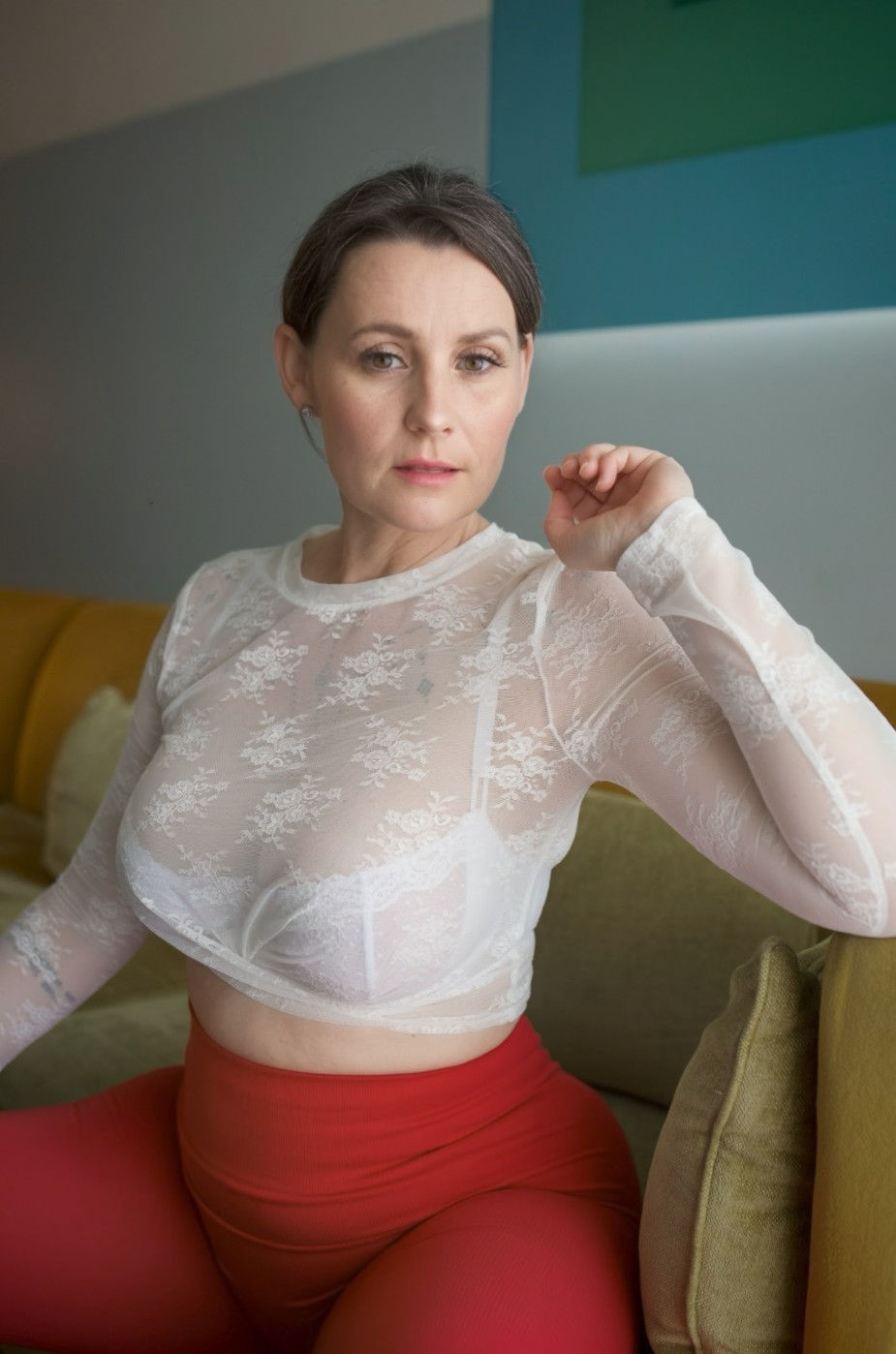
Adult Entertainment Has Always Been Obsessed With the New
There is something almost industrial about the way adult entertainment treats novelty. New faces, new creators, new accounts, new trends, new platforms, and new viral moments constantly move through the industry's attention cycle. The vocabulary itself tells us something about the machinery surrounding the people who work within it.
The modern creator economy hasn't completely escaped that gravitational pull simply because performers now own cameras, operate their own subscription pages, and control more of their businesses. Scroll through creator advice long enough and you will encounter an endless supply of strategies for growth, virality, subscriber acquisition, conversion, engagement, and becoming the next breakout star. There is considerably less discussion about what a successful 10-, 20-, or 30-year creator career is supposed to look like.
That is strange because we keep insisting these creators are entrepreneurs. If these are businesses rather than temporary internet personalities, longevity should be one of the central conversations in the industry. We should be asking what the career ladder looks like, what assets creators accumulate over time, and how experience increases rather than decreases someone's economic value.
Instead, there can be an implied expiration date hanging over women whose businesses are connected to appearance or sexuality. The message doesn't necessarily need to be spoken aloud because women absorb it culturally from the moment they are old enough to understand that society evaluates their appearance. Youth is associated with desirability, aging is frequently framed as decline, and female sexuality is too often discussed as though it belongs primarily to the young.
Melody Jai's story challenges that assumption in an interesting way. She isn't simply arguing that women can remain desirable after 40. Her career raises a much larger question about whether the industry has misunderstood what actually becomes more valuable as a creator ages.
She Was a Creator Before We Had a Name for Creators
The timeline is important. Jai entered adult entertainment in 1999, and roughly a decade later she experienced the kind of online visibility we would now immediately recognize as a viral moment. Her biography describes a 2009 twerking video that reached millions of viewers and helped create demand that she was subsequently able to monetize online.
Think about what the internet looked like in 2009. Instagram had not launched. TikTok didn't exist. OnlyFans wouldn't arrive until years later. The word "influencer" had not yet become a perfectly ordinary occupation someone could list on a tax return.
Yet the fundamental mechanics of the creator economy were already there. A person created something, the internet distributed it, an audience gathered around the person, some portion of that audience wanted more, and the person discovered a way to monetize that attention directly. We hadn't built today's enormous technology stack around that behavior yet, but the economic relationship was already recognizable.
That makes Jai's present evolution considerably more interesting. She isn't someone who suddenly reached her 40s and decided she needed to manufacture a second act because the first one stopped working. She has been adapting her identity and business to changing media environments for more than two decades.
The Internet Changed. So Did She.
Careers aren't always straight lines, particularly careers built during periods of enormous technological change. People stop, return, change direction, discover new interests, abandon old assumptions, and sometimes find themselves returning to something they thought they had left behind. The person changes while the technology underneath that person's career changes at the same time.
The creator economy tends to describe these changes as "rebranding." I think that language is often too shallow because people aren't consumer products changing their packaging. They're human beings accumulating chapters, and those accumulated chapters can eventually become more valuable than any individual piece of content they produced along the way.
An identity that once occupied 90 percent of someone's life might eventually occupy 30 percent while new interests, businesses, relationships, expertise, and ambitions grow around it. That does not necessarily mean the original identity was a mistake. It means a person became larger than the category through which the public originally discovered her.
That is exactly what I find interesting about Melody Jai. Adult entertainer, entrepreneur, viral internet personality, traveler, yoga practitioner, culinary graduate, author, coach, and spiritual practitioner do not have to be competing identities. They can be chapters in the same biography.

This Is Why Personal Branding Matters
Joseph Haecker, our Editor-in-Chief at Only Fans Insider Magazine, has been beating this drum for a long time. Adult creators need to build personal brands larger than the content category that initially made them money. That isn't because there is anything inherently shameful about adult content; it is because no single product should represent the outer boundary of someone's professional identity.
Melody Jai may be one of the cleaner examples of what that philosophy looks like over a long enough timeline. She has adult entertainment in her history, entrepreneurship in her history, viral internet culture in her history, travel in her history, and increasingly wellness, spirituality, writing, and coaching in her present. The conventional branding exercise would probably tell her to choose one and make the messaging cleaner.
Real human beings aren't clean.
They are complicated, contradictory, evolving, and sometimes impossible to fit into the neat categories marketing departments prefer. That complexity can become a tremendous advantage when the individual herself becomes the brand. Instead of asking which version of Melody is the "real" Melody, perhaps the better answer is that all of them are real.
That changes the business model. When the audience is interested only in the product, the creator must continue producing essentially the same product to maintain the relationship. When the audience becomes interested in the human being, the relationship has somewhere to go.
We Need to Stop Calling Every Change a Reinvention
"Reinvention" is one of those words journalists love because it creates an easy headline. A woman turns 40 and reinvents herself. A former adult entertainer reinvents herself as a wellness professional. A creator reinvents herself as an author.
Except that isn't really what Jai's story appears to be about. Reinvention implies replacement, as though something old must be discarded so something new can take its place. What I see in her story is closer to accumulation.
The woman who entered adult entertainment gained experiences that eventually influenced the entrepreneur. The entrepreneur acquired lessons that traveled with the woman who explored the world. The traveler encountered ideas that influenced the woman who studied yoga and spirituality. The woman who experienced complicated relationships eventually had stories and reflections that could become a memoir.
One life keeps feeding the next part of itself. That isn't reinvention as much as it is growth, and there is an enormous psychological difference between saying, "I am no longer that woman," and saying, "That woman is one of the reasons I am this woman."
Jai's own words capture that distinction more effectively than I could. “Every version of me helped create the life I have now.” That isn't an apology for the past; it is an acknowledgment that the past remains part of the architecture supporting the present.
Then There Is the Book
Another important piece of this evolution is Jai's memoir, I Thought U Should Know (https://amzn.to/4AFyqNW). According to her press materials, the book chronicles a 14-year, on-and-off relationship with a world-famous R&B entertainer alongside the personal healing journey that followed. It turns something intensely private into another form of storytelling.
A book is obviously a very different product from adult content, but it doesn't have to be disconnected from the woman who created both. That is precisely where the business lesson becomes interesting. A creator who builds an audience entirely around one product eventually has to keep producing that product, while a creator who builds an audience around herself can potentially invite that audience into new parts of her life.
Those new parts might eventually include books, speaking, podcasts, coaching, travel, events, products, documentaries, education, wellness, or businesses that haven't even been conceived yet. Not every creator should pursue those paths, and nobody should manufacture expertise merely because another revenue stream appears attractive. The point is that the original content can become an entry point into a larger personal brand rather than a cage that permanently defines its creator.
That is the difference between building a content business and building intellectual property around a human being.
Your Past Can Become Intellectual Property
This is something I think the creator economy still misunderstands. Experience has value, even when that experience cannot be packaged into a 30-second Reel or placed behind a subscription wall.
The internet trains creators to think primarily in terms of content inventory. How many photographs do you have? How many videos can you produce? How frequently can you post? How many livestreams can you schedule this month?
A creator who has spent 10, 15, or 20 years living an unusual life possesses another kind of inventory. She has the terrible first gig, the first thousand dollars, the person who underestimated her, the relationship that nearly broke her, the business mistake nobody warned her about, the country that changed her, the moment she realized she was burned out, and the platform that suddenly changed its rules.
Those experiences can eventually become interviews, essays, books, documentaries, podcasts, speeches, mentorship, education, or simply better conversations with an audience. A 25-year-old creator may possess enormous cultural relevance and energy, but a 45-year-old creator potentially possesses something she literally could not purchase at 25: another 20 years of lived experience.
Why would an industry built around human personalities automatically treat that as depreciation?

Sexuality Doesn't Magically End at 40
There is also an obvious contradiction in the way our culture talks about aging women. People continue dating, having relationships, seeking intimacy, exercising, traveling, getting divorced, remarrying, changing careers, falling in love, and discovering entirely new versions of themselves well beyond their 20s and 30s. Yet industries built around beauty and sexuality have historically treated women as though aging moves them progressively farther away from relevance.
The direct-to-fan creator economy has an opportunity to challenge that assumption. Creators no longer need every producer, casting director, editor, or studio executive to agree that they remain commercially valuable. They can increasingly discover which audiences actually value them and build businesses around those relationships directly.
That doesn't mean age suddenly becomes irrelevant to consumer behavior, nor does it mean every creator will maintain the same audience forever. Markets change, audiences change, bodies change, and no business model guarantees permanent demand. What changes is the creator's ability to discover and serve an audience without relying entirely on someone else's assumptions about who that audience is supposed to desire.
That is a meaningful shift in power.
Forty Can Be a Beginning
This is where Jai's announcement becomes more interesting than another story about a public figure aging. She isn't merely demonstrating that women can remain attractive after 40. That's far too small a conclusion to draw from a career that began in 1999.
Her story suggests that 40 can be the point at which accumulated experience begins producing entirely new forms of value. Consider what someone can potentially know at 40 that she could not possibly have known at 20. She has experienced consequences, watched friendships change, seen industries evolve, made financial decisions, survived relationships, made mistakes, changed her mind, and perhaps learned something about who she actually is when nobody else gets to define her.
Age itself doesn't automatically produce wisdom. Plenty of people grow older without becoming particularly reflective, and life experience alone doesn't qualify someone to advise others. But time creates the possibility of perspective, and perspective can become valuable when someone has the ability to communicate what she has learned responsibly.
Jai appears interested in turning some of that perspective into her next body of work. That is a much more interesting framing than asking whether an adult entertainer can still be relevant in her 40s.
India, Peru, and the Road Between Them
Jai's next chapter didn't suddenly materialize with this week's press release. According to her biography and press materials, her journey has included yoga training in India, experiences with ayahuasca and plant medicine in Peru, Nature Aligned Leadership training, spiritual study, and extensive travel. She eventually bought an RV and began traveling full-time, making movement itself part of the life she was building.
Those spiritual experiences are personal experiences rather than scientific credentials, and they should be understood accordingly. What makes them relevant to this story is not whether a reader shares Jai's spiritual worldview. They matter because they demonstrate that the identity she is presenting today developed gradually through years of exploration rather than appearing suddenly as a marketing campaign.
There is something almost metaphorical about the RV chapter. A woman who has spent decades refusing to remain inside a single professional category eventually bought a vehicle and started moving. Whatever someone thinks about her choices, there is a consistency in that impulse toward exploration.
She doesn't appear particularly interested in remaining where other people expect to find her.
The Adult Industry Loves an Exit Story
We have seen versions of the "former adult star" narrative countless times. Someone leaves adult entertainment and the story becomes one of redemption: she found religion, motherhood, business, wellness, spirituality, or herself. Sometimes that genuinely reflects the person's experience, and she deserves to tell her story exactly that way.
But there is also a cultural appetite for narratives in which a woman becomes respectable only after rejecting the sexual version of herself. That framing quietly reinforces the assumption that sexuality and intellectual growth, spirituality, entrepreneurship, motherhood, professionalism, or maturity cannot comfortably exist within the same person.
Jai doesn't appear particularly interested in giving us that clean narrative. Her current chapter does not require audiences to forgive the woman who came before it. She is bringing that woman with her.
That may be the most interesting part of her story. She isn't announcing that one version of Melody Jai died so another could finally become respectable. She is arguing that those identities belong to the same life.
Integration May Be the Most Radical Part
Not the yoga, the RV, the book, or becoming a coach. The most interesting idea here is integration.
Shame thrives on fragmentation because it tells people certain pieces of their lives must remain hidden from other pieces. Don't let the corporate clients know about that. Don't let the adult audience see this. Don't let the wellness community discover your past. Don't let the customers see your spirituality.
There are legitimate reasons people compartmentalize their lives, particularly creators who face stalking, harassment, discrimination, family concerns, or other safety risks. Privacy is not shame, and nobody should be pressured into publicly integrating parts of an identity they would prefer to keep separate.
But there is also extraordinary power in someone who deliberately chooses integration. Jai's message seems to be that all of these experiences belong to her, and therefore she gets to decide how they fit together.

That Has Commercial Value, Too
There is a tendency to treat personal growth as something entirely separate from business strategy, but a multidimensional personal brand creates more potential doors. An adult creator might be relevant to an adult convention, while an adult creator who is also an accomplished gamer can potentially participate in gaming conversations. A creator with legitimate entrepreneurial experience can discuss business, and a creator who publishes a memoir can enter literary conversations.
Different dimensions create different media angles. Different media angles can introduce the person to different audiences, and different audiences can eventually create different professional opportunities. That is how a career becomes less dependent upon one platform, one algorithm, one revenue stream, or one moment in someone's life.
This doesn't mean creators should suddenly manufacture credentials or become coaches because coaching appears monetizable. Expertise needs to be legitimate, and claims should reflect actual training and experience. It simply means creators should stop assuming that whatever pays the bills today represents the outer boundary of who they are permitted to become tomorrow.
That is particularly important in adult entertainment because platform dependency remains one of the industry's greatest vulnerabilities. The more valuable the person becomes independently of any single platform, the more options that person has.
This Is Also Why Press Matters
Melody Jai's press release arrived in our newsroom because there is a story beyond a content drop. That distinction matters because press functions differently from social media.
A social post can tell people what someone is doing today. A meaningful profile can help audiences understand why decades of experiences led that person to what she is doing today. The difference is context.
If Jai merely announced a coaching service on social media, audiences unfamiliar with the preceding decades might reasonably wonder where it came from. Place the same work inside the context of adult entertainment, entrepreneurship, travel, yoga training, spiritual exploration, complicated relationships, writing, and personal evolution, and suddenly the progression becomes easier to understand.
Context creates coherence, coherence creates narrative, and narrative helps create a personal brand people can actually remember. This is one of the reasons Only Fans Insider Magazine continues returning to creator stories rather than treating creators simply as producers of adult content.
The adult creator economy doesn't need another billion photographs floating through feeds without context. It needs a historical record of the human beings behind those photographs, the businesses they built, the mistakes they made, the things they learned, and the people they eventually became.
A Creator Career Should Have Somewhere to Go
This may be the most important lesson I take from Jai's story. Success cannot simply mean doing more of the same thing forever.
More posts, more subscribers, more direct messages, more content, more livestreams, more platforms, and more hours cannot be the only definition of progress. Eventually, a career needs somewhere to go, particularly if we genuinely believe creators are building businesses rather than participating in a temporary internet phenomenon.
Traditional entertainment industries have long understood this. Actors become producers and directors. Musicians launch labels and companies. Athletes become commentators, investors, coaches, and team owners. Models build fashion and beauty companies, while chefs publish books, host television programs, and open restaurants.
Their original craft doesn't necessarily disappear when those opportunities emerge. It becomes the foundation underneath them.
The creator economy needs a similar career ladder. A creator should have pathways toward becoming an author, founder, investor, producer, director, host, speaker, educator, executive, publisher, or whatever else her accumulated experience genuinely prepares her to become.
Otherwise, we have built an industry where "success" simply means remaining on the treadmill longer than everyone else.

The Human Being Is the Asset
That is why I keep coming back to Jai's statement that she does not have to erase the woman she used to be to honor the woman she has become. The creator economy has spent an extraordinary amount of money building technologies around creators, including subscription platforms, analytics systems, payment infrastructure, recommendation algorithms, AI tools, scheduling systems, and countless ways to automate pieces of the creator's business.
Perhaps the industry's most valuable asset has been sitting in front of us the entire time. It is the human being herself, along with her experiences, personality, failures, evolution, contradictions, expertise, relationships, ambitions, and stories.
Melody Jai's career began long before anyone was routinely using the phrase "creator economy." She has lived through multiple generations of internet culture and watched technologies, platforms, and business models arrive and disappear. She experienced internet virality before virality became an entire marketing discipline and built businesses around herself before creator entrepreneurship became fashionable.
Now she is over 40, and I think that makes the story more interesting rather than less. Perhaps some of the most valuable parts of her story simply required 40 years to exist.
Maybe There Is No "After"
I don't know where Melody Jai's newest chapter ultimately leads, and I don't think anybody needs to know yet. Maybe coaching becomes central to her work, maybe the memoir opens entirely different doors, maybe travel becomes more prominent, or maybe she continues creating adult content alongside all of it. Something she hasn't imagined yet may ultimately become the most important part of her next decade.
What matters is that none of those possibilities requires pretending 1999 never happened. She doesn't have to spend the second half of her life apologizing for the first half in order for the next chapter to count.
That is the model I would like to see more creators consider. Don't spend an entire career building an identity that you eventually feel obligated to escape. Build an identity capable of expanding as you do.
Make audiences interested in your content, certainly, but give them opportunities to become interested in your mind, history, ambitions, strange hobbies, failures, expertise, evolution, and story. Those things can travel with you long after a particular platform, algorithm, or content format stops being culturally important.
Platforms age. Algorithms age. Audiences age. Creators age. Every one of us does.
The goal was never supposed to be staying young enough for the internet. The goal should be building something capable of growing older with you.
Perhaps Melody Jai isn't entering the chapter that comes after adult entertainment at all. Perhaps after more than two decades of watching her life evolve, we are finally being reminded that the woman was always bigger than the category used to describe her.
And for the creator economy, that may be the part of Melody Jai's story most worth remembering.
By Ryder Vale, Staff Writer, Only Fans Insider Magazine
ABOUT MELODY JAI:
Melody Jai is an author, entrepreneur and adult entertainer who has never mistaken one identity for the whole of who she is. Her multifaceted life also includes work as a Nature Aligned Leadership Coach, chef, 500-hour trained yoga instructor and High Priestess. Jai entered adult entertainment in 1999, then became an early viral sensation through a 2009 twerking video that reached millions before “going viral” became everyday language. She turned that visibility into a successful independently operated adult entertainment business and has also worked on film sets, appeared in music videos and earned film and television credits under the name Melody S. Jones.
Born in Germany and introduced to travel at an early age, Jai has built her life through direct experience. Her curiosity has taken her to India for yoga training, Peru for ayahuasca and plant medicine and Alaska for work, as well as across the country while living and traveling full-time in an RV. Along the way, the culinary graduate has studied elemental wisdom, astrology, archetypes and spiritual practice. She has completed a year-long Nature Aligned Leadership certification in addition to High Priestess and intuitive oracle training. Her rule for living is simple: experience all the things and, sometimes, do it for the plot.
At the center of Jai’s philosophy is the Creatrix, a woman who thinks for herself, accepts responsibility for her choices and consciously participates in creating her own reality. Her debut memoir, I Thought U Should Know, brings that philosophy to an intensely personal story, chronicling an 14-year, on-and-off relationship with a world-famous entertainer and the healing journey that led her back to herself. Today, Jai brings sexuality, spirituality, entrepreneurship, travel, food and personal transformation into one unapologetically whole life, guided by the conviction that a woman never has to make herself smaller or simpler to live with integrity.
FOLLOW MELODY JAI:
Instagram: https://www.instagram.com/themelodyjai


Comments