

OnlyFans Owner Gone
Written by: Pauline Schmiechen
Icons OF Industry
Industry Minds & Voices That Shape the Creator Economy
Welcome to Icons OF Industry, the most exclusive editorial section of Only Fans Insider Magazine — where the boldest voices, biggest influencers, and leading thought leaders shape the conversation around the creator economy. Unlike interviews or spotlights, Icons OF Industry is not about retelling stories — it’s about rewriting the playbook. These articles are raw, unapologetic perspectives from the people setting the pace of change. Here, industry icons have the freedom to share predictions, insights, and unapologetically bold ideas that capture the pulse of our community and the future ahead. From platform evolution and monetization shifts, to cultural movements reshaping how creators, agencies, and brands interact — every article in Icons OF Industry delivers a front-row seat to where this space is truly headed. This isn’t just commentary. It’s perspective with purpose. Each feature is a direct line into the authentic voices of our community — informed, fearless, and deeply original. By engaging with Icons OF Industry, you’re not just reading about the creator economy; you’re stepping inside the conversation, guided by those who are defining it. And when you share these insights forward, you’re doing more than reposting — you’re amplifying the icons of our industry, ensuring their voices resonate across new audiences and reshape the narrative itself. Because in the end, the creator economy isn’t defined by platforms. It’s written, shaped, and driven by the Icons OF Industry.


3 Possible Outcomes for the Platform & it’s Creators
Written by: Pauline Schmiechen
Creator Growth Consultant at Kotti Konsulting
IG: @generalpaulinski
Apr 2, 2026

MEN'S GROOMING PRODUCTS
Dumpkin Spice Adult Flushable Wipes
DUDE Wipes
Leonid Radvinsky is dead. R.I.P.
At 42 years old, the man behind one of the most profitable platforms on the internet is suddenly gone — leaving behind a business that generated billions in revenue and built him an estimated net worth of $4.7 billion. For years, Radvinsky remained almost invisible. No public persona, no founder cult, no interviews shaping the narrative. And yet, under his ownership, OnlyFans became one of the most efficient monetization systems ever created: direct fan relationships, recurring subscription revenue, global scale — and a clean 20% platform cut layered on top.
Radvinsky didn’t originally build OnlyFans. The platform was founded in 2016 by Tim Stokely, but it only became what we know today after Radvinsky acquired a majority stake around 2018 through his company. Coming from the adult industry himself, with ventures like MyFreeCams and WebCam platforms, he understood something most Silicon Valley operators didn’t: monetization in adult is not an edge case — it’s the most refined version of direct-to-consumer digital income.
Under his ownership, OnlyFans scaled into a platform processing more than $6 billion annually in gross payments. High margins, minimal infrastructure, and one of the cleanest revenue models on the internet.
And now, the architect of that system is gone.
This is not just another founder story. It is a structural moment. Because this isn’t a personality-driven company — it’s an economic machine. And the question now is not whether OnlyFans continues to operate. It’s who controls it, and what direction that control takes.
The industry has seen uncertainty before. In 2021, when OnlyFans briefly announced a ban on explicit content, creators reacted instantly. There was panic, migration, backlash — and within days, the decision was reversed. Trust was shaken, but quickly restored.
This moment feels different.
Because this time, the uncertainty isn’t about policy.
It’s about ownership.
Scenario 1: The Sale Gets Finalized — and the Industry Gets Repriced
The most stable and, in many ways, most important outcome is that nothing fundamentally breaks. The platform continues operating, the transition happens behind the scenes, and the sale — which had already been rumored to be in advanced stages before Radvinsky’s death — gets finalized.
Reports had already placed OnlyFans in the middle of serious acquisition talks, with valuations ranging between $5.5 billion and $8 billion. Firms like Forest Road Capital were mentioned, alongside other private equity and media players, with dozens of potential buyers reportedly circling the deal. If this transaction closes, it would not only be the largest exit in the history of the adult industry — it would also be one of the clearest signals yet that this space has fully entered the realm of institutional capital.
Because the buyer matters. If OnlyFans ends up in the hands of a mainstream media operator, a private equity fund, or a hybrid entertainment group, the narrative shifts immediately. What was once perceived as a controversial niche platform becomes a scalable, high-margin digital media asset. And that reclassification has consequences.
It affects how investors evaluate the entire category. It affects how founders in adjacent spaces raise capital. It affects how creators themselves think about what they are building. Because once a transaction of this size happens publicly, it establishes precedent. And precedent is what turns abstract potential into concrete strategy.
In this scenario, the upside extends far beyond OnlyFans itself. The entire ecosystem benefits from increased legitimacy. Companies in the space gain access to capital more easily. Buyers start to actively look for similar assets. And creators, perhaps for the first time at scale, begin to understand that their brands are not just income streams — but structured assets with exit potential.
Scenario 2: The Clean Pivot — Where Narrative Meets Economics
The second scenario is the one most likely to dominate headlines, particularly outside the industry: a strategic repositioning of OnlyFans toward a more “mainstream” or “clean” platform. This could come from new ownership, or even from a family trust structure taking a more conservative approach to long-term risk.
On the surface, the logic is compelling. Regulatory pressure is increasing globally, with age verification laws tightening and political scrutiny around adult content growing. Payment providers remain cautious, and the absence of mainstream advertisers continues to limit certain types of expansion. From a purely external perspective, moving toward a more brand-safe positioning appears like a natural evolution.
But internally, the equation looks very different.
OnlyFans did not become a multi-billion dollar business by accident, nor in spite of its adult content base. The monetization mechanics that make the platform so effective — direct fan relationships, high willingness to pay, recurring subscriptions, and emotional engagement — are deeply tied to the nature of spicy content. While the platform has always positioned itself publicly as “creator-first,” industry insiders understand that the vast majority of its economic engine is driven by adult dynamics.
So the question becomes: what does a “clean pivot” actually mean in practice?
It is unlikely to mean a full removal of adult content — that scenario has already proven unsustainable. Instead, it could manifest as a gradual tightening: stricter moderation, more defined limits on explicit content, stronger enforcement mechanisms, and a deliberate shift in branding to highlight non-adult creators more prominently.
The risk is not immediate collapse, but misalignment.
You can reshape perception externally, but if you weaken the core monetization layer internally, you create tension between narrative and reality. And in a business that is this dependent on creator output and trust, that tension matters.
This makes the clean pivot neither an obvious success nor an obvious failure. It sits in a middle ground — one where strategic intent must be balanced very carefully against the economic foundation that made the platform valuable in the first place.
Scenario 3: Fragmentation and the Creator Exit Wave
The third scenario is less about top-down decisions and more about bottom-up reactions. It is driven not by policy changes, but by uncertainty — and uncertainty has historically been the fastest trigger for movement in the creator economy.
The industry has already experienced how quickly things can shift. When OnlyFans announced restrictions in 2021, the response from creators was immediate and decisive. They diversified, tested alternatives, and in many cases began building outside the platform. Competitors like Fansly gained traction not because they were technically superior, but because they represented stability in a moment where OnlyFans briefly did not.
Today, the environment is even more dynamic.
There are more viable platforms, better payment infrastructures, and a much higher level of creator awareness around ownership, risk, and diversification. If the current situation leads to prolonged ambiguity — unclear ownership structures, unclear strategic direction, or inconsistent communication — the response from top creators is unlikely to be passive.
They will act.
Some will hedge by building across multiple platforms. Others will begin migrating audiences more aggressively. And a growing number may take a different route altogether: they may choose to exit.
Because alongside this moment of platform uncertainty, another trend is accelerating quietly in parallel — the assetization of creator brands. For creators who have built significant audiences, structured content libraries, and consistent revenue streams, the question is no longer just where to post. It is whether to continue operating the machine at all.
Selling becomes a rational option.
And in a market where buyers are increasingly looking for scalable, high-margin digital assets, that option becomes more attractive precisely when platform risk increases.
In this scenario, OnlyFans does not collapse. But it begins to lose momentum at the edges. Not through regulation or direct competition, but through a gradual shift in where creators and capital choose to concentrate.
And in a platform economy, losing the top layer of creators is equivalent to losing oxygen.
What This Moment Actually Signals
While most headlines focus on the immediate question of ownership, the deeper shift is already underway. Regardless of which scenario unfolds, this moment accelerates a transition that has been building for years.
The adult creator economy is moving from platform dependency toward asset ownership. From monthly income toward structured exit potential. From content production toward capitalized infrastructure.
Leonid Radvinsky built one of the most efficient monetization systems the internet has ever seen. What happens next will determine whether OnlyFans remains the dominant platform within that system — or whether it becomes the foundation for a broader redefinition of how digital creator businesses are valued, traded, and scaled.
The question is no longer just what happens to OnlyFans.
It’s what happens to everything built on top of it.

COMFORT CREAM DEODORANT FOR MEN
Anti-Chafing Sweat Defense, Odor Control, Aluminum-Free Mens Deodorant & Hygiene
HAPPY NUTS

Apparel & Merch Fulfillment
Our marketplace with fresh, dirty listings and real sellers awaits.
dirtyknickers.com
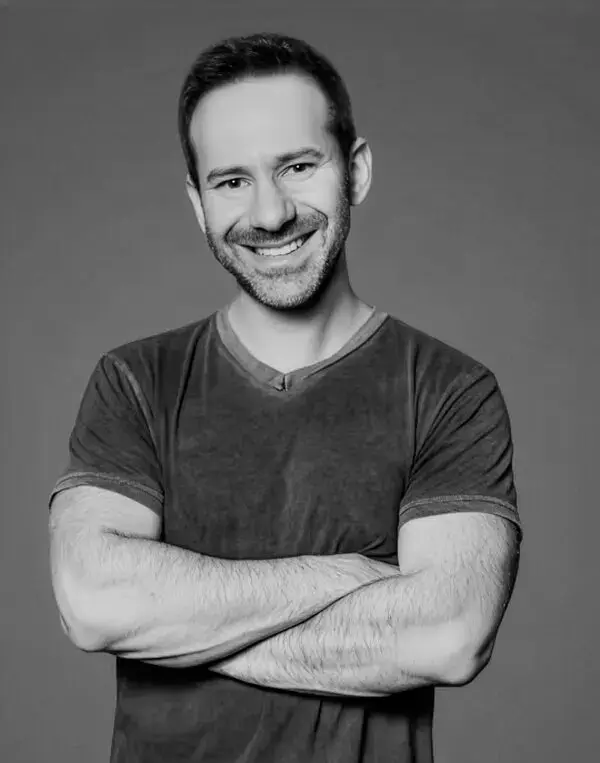
Photos by: LR Foundation


Written by: Pauline Schmiechen
Creator Growth Consultant at Kotti Konsulting
IG: @generalpaulinski
Did you like this article? Share it on social media:

Natural Male Enhancement
Be Ready For Any Spontaneous Moment
TUPI TEA

ADULT TOYS
Rechargeable Wireless Bullet
Generic

