


When the Platform Is Loud but the Creators Are Quiet: Why the Future of OnlyFans Is Story, Not Spectacle

By Lila Monroe, Journalist for Only Fans Insider Magazine
I read Keily Blair’s post early in the morning, the way I read things that feel like they matter. Coffee untouched. Notifications ignored. The kind of quiet where you’re not just consuming words, but listening for intention.
It wasn’t the numbers that made me pause—though $25 billion paid out to creators should stop anyone mid-scroll. It wasn’t even the Masters of Scale stage at Web Summit, or the calm authority with which she spoke about a platform most people still insist on misunderstanding.
It was the restraint.
Keily didn’t try to convince anyone to like OnlyFans. She didn’t sanitize it. She didn’t posture. She simply stated the truth most people refuse to sit with:
Most people who have strong opinions about this industry have never actually been on the platform.
Anyone who has spent time inside creator communities knows how accurate—and how damning—that sentence is.

At Only Fans Insider Magazine, we live in the gap between perception and reality. We talk to creators after the headlines fade. We hear the parts of the story that don’t make it into viral outrage cycles. The logistics. The boundaries. The burnout. The pride. The quiet wins. The nights they almost quit—and the mornings they didn’t.
That’s why when Joseph Haecker, our Editor-in-Chief, shared his response to Keily’s appearance, it felt less like commentary and more like alignment.
Joseph has spent years building platforms where customers—now creators—aren’t treated as content, but as contributors. His stance is clear: this industry doesn’t just need better explanations. It needs its story told by the people actually living it.
And that belief is not theoretical here. It’s operational.
It’s why this magazine exists.
The Stories That Never Go Viral—but Change Everything
When people talk about OnlyFans in abstract terms, they miss the specificity that makes it human.
They miss Flora the Yogi, who didn’t “pivot away” from adult content so much as she expanded it—introducing intimacy without urgency, connection without consumption. Her bedtime stories weren’t a gimmick; they were a response to loneliness. Men didn’t subscribe for explicit access. They stayed because someone spoke to them like they mattered.
They miss creators like our November Cover Model, Mag Numb, whose work blurred the line between erotica and ritual, proving that desire doesn’t have to be disposable to be powerful. Her audience didn’t just watch—they witnessed. And in doing so, they learned how different engagement feels when it’s rooted in intention rather than compulsion.
They miss stories like our October Cyber Model, Lauren Phillips, who built a career not just on performance, but on ownership—merch, appearances, education, and business strategy layered on top of visibility. Her success isn’t accidental. It’s architectural.
These stories don’t fit neatly into mainstream narratives. They’re too nuanced. Too human. Too inconvenient for clickbait.
And yet—they are the industry.

Hugh Hefner Understood This Before the Internet Did
Joseph often references Hugh Hefner when he talks about inflection points—not because Playboy was flawless, but because Hefner grasped something most platforms still struggle with: control the narrative, or someone else will distort it for you.
Playboy wasn’t just about images. It was about identity, aspiration, culture, and conversation. It reframed a taboo industry by embedding it in lifestyle and dialogue.
Today, creators are attempting something even more complex: building identity, income, and intimacy in a digital space that rewards speed over depth and spectacle over substance.
The difference now is that creators don’t need a single gatekeeper to tell their story.
They need infrastructure.
That’s what press becomes when it’s done right.
Why Only Fans Insider Magazine Is Not a Media Brand—It’s a Tool
We didn’t build this magazine to make creators look “better” to outsiders. We built it to give them ownership.
Ownership of language.
Ownership of positioning.
Ownership of permanence.
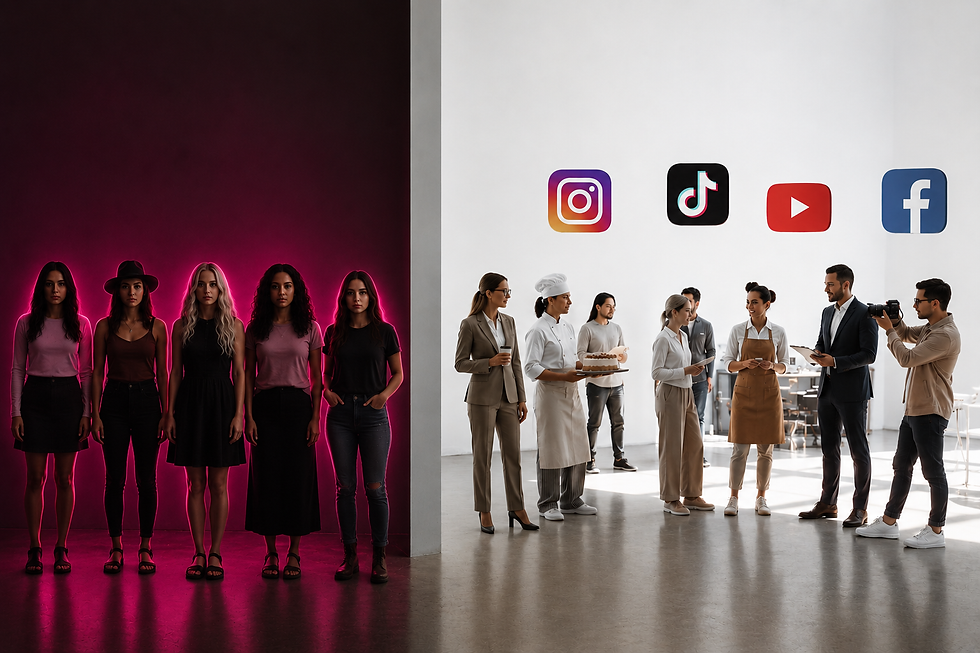
Social platforms are volatile by design. Algorithms reward novelty, not truth. Visibility spikes—and vanishes. But a published story endures. It becomes something a creator can point to, build on, license from, and leverage in rooms where social metrics alone don’t carry weight.
That’s why we’re user-generated by design.
Creators don’t just get featured here. They publish. They create searchable, ownable assets that live beyond the lifespan of a Reel or a trending topic. They build credibility that doesn’t disappear when a platform changes its rules.
And recently, that philosophy has expanded.
By introducing men’s lifestyle, product features, and brand-aligned storytelling, we’ve watched creators step into a new role—not just as talent, but as partners. Suddenly, brands aren’t just asking, “How many followers do you have?” They’re asking, “Can you move product? Can you tell a story? Can you convert trust into action?”
That’s where real money lives.
What Keily Blair Is Doing—and Why It Matters
Keily’s presence on stages like Masters of Scale isn’t about defending OnlyFans. It’s about normalizing creator-led business models in rooms that still pretend they don’t exist.
Her refusal to over-explain is strategic. She understands something many CEOs don’t: legitimacy doesn’t come from appeasement. It comes from clarity.
OnlyFans doesn’t need to be everyone’s cup of tea—as long as it remains someone’s glass of champagne.
From where I sit, Keily is doing the external work—staking ground, correcting the record, asserting the platform’s architecture. Joseph is doing the internal work—building systems that allow creators to own their voice, monetize their expertise, and outlast algorithmic whims.
These are not competing visions. They are two halves of the same future.
Why the Next Chapter Belongs to Creators Who Tell Their Own Stories
The creator economy is entering its adult phase—not in content, but in maturity.
The novelty is gone. The shock value has faded. What remains is sustainability.
Creators who survive the next decade won’t just be visible. They’ll be published. They’ll have narratives that brands can understand, journalists can reference, and audiences can trust.
They won’t rely on being misunderstood for attention.
They’ll rely on being understood.
And that’s the shift I see happening now—quietly, deliberately, story by story.
Visibility fades.
Algorithms change.
Outrage moves on.
But a published story lasts.
In a digital world, owning your narrative isn’t optional.
It’s power.
— Lila Monroe
Only Fans Insider Magazine



Comments