


Before Playboy, There Was Silence. After Playboy, There Was a Conversation

By Ryder Vale, Staff Writer at Only Fans Insider Magazine
Before Hugh Hefner ever stapled together the first issue of Playboy in 1953, the adult industry didn’t resemble anything close to what we would recognize today.
There were no brands. No personalities. No platforms built around identity or narrative.
There was no industry—at least not one that could stand in the light.
There was only fragmentation.
Adult imagery existed in quiet pockets of culture—pin-up calendars passed between soldiers during World War II, underground photography circulated in discreet circles, risqué pulp magazines that sat just far enough outside mainstream visibility to avoid outright suppression. These were artifacts of desire, but they were not ecosystems. They were disconnected, stigmatized, and almost entirely stripped of context.
You didn’t build a business around adult content.
You consumed it quietly.
And you certainly didn’t talk about it.
That silence wasn’t accidental—it was enforced. Through law, through culture, through religion, through social norms that dictated what was acceptable in public and what had to remain hidden. Adult content wasn’t just taboo—it was invisible by design.
And when something is invisible, it can’t evolve.
It can’t organize.
It can’t professionalize.
It can’t become legitimate.
That was the world Hefner stepped into.
The Accidental Architect of a Cultural Shift
When Hugh Hefner launched Playboy, he wasn’t trying to build an empire.
He was trying to correct what he saw as a gap.
At the time, men’s magazines like Esquire existed—but they leaned heavily into traditional masculinity: war stories, business, fashion, and culture filtered through a conservative lens. Desire was implied, but rarely explored openly.
Hefner believed that contradiction didn’t reflect reality.
Men were curious. Sexual. Interested in art, literature, politics, and pleasure—all at once. And yet, there was no publication that allowed those identities to coexist.
So he built one.
From his kitchen.
With borrowed money.
And very little certainty that it would work.
The first issue of Playboy, released in December 1953, famously carried no date. Hefner wasn’t confident there would be a second issue. It was a risk in every sense—financial, professional, and cultural.
Then came the decision that turned risk into momentum.
He featured Marilyn Monroe.
Not as a scandal.
As a centerpiece.
The photos had been taken years earlier, originally for a calendar shoot. But Monroe’s rising celebrity transformed them into something else entirely. She wasn’t just a model—she was a symbol of modern femininity, glamour, and curiosity.
That first issue sold more than 50,000 copies.
And in that moment, something subtle—but powerful—shifted.
Playboy Didn’t Invent Desire. It Organized It.
This is where most people misunderstand Playboy’s impact.
It didn’t create the demand for adult content.
That demand already existed.
What Playboy did was give that demand structure.
It gave it a home.
A language.
A narrative.
Before Playboy, adult content was isolated. After Playboy, it became part of a broader cultural conversation. The magazine didn’t just show bodies—it surrounded them with context. Articles. Interviews. Fiction. Commentary.
It introduced the idea that sexuality could exist alongside intellect.
That you could read James Baldwin or Vladimir Nabokov, then flip a few pages and encounter a centerfold—and that those experiences didn’t cancel each other out.
They complemented each other.
That was radical.
Because it reframed the conversation entirely.
Playboy wasn’t selling sex.
It was selling permission.
Permission to engage.
Permission to be curious.
Permission to acknowledge something that had always existed—but had never been allowed into the open.
The Rise of an Ecosystem
By the 1960's and 70's, Playboy had evolved into something far beyond a magazine.
It became an ecosystem.
The Playboy Clubs weren’t just nightlife venues—they were cultural spaces. Places where the brand extended into real-world interaction. Where identity, status, and experience intersected.
The Playboy Mansion became mythological—a physical embodiment of the brand’s ethos. It wasn’t just a house. It was a stage.
And Hefner himself became a symbol.
Not just a publisher.
A persona.
A living representation of the lifestyle he was selling.
This is where Playboy truly separated itself from everything that came before it.
It didn’t just distribute content.
It built culture.
The Cultural Impact Wasn’t Just About Sex
Playboy entered the world during a period of massive social change.
The civil rights movement. The women’s liberation movement. The sexual revolution. A broader questioning of authority and tradition.
And the magazine—intentionally or not—became part of that conversation.
It published interviews with figures like Malcolm X, John Lennon, and Martin Luther King Jr.. These weren’t throwaway pieces—they were long-form, in-depth conversations that added intellectual weight to the publication.
That mattered.
Because it positioned Playboy as more than entertainment.
It positioned it as a platform.
A place where ideas lived alongside imagery.
Where conversation could happen.
Where the boundaries between “high culture” and “low culture” began to blur.
For the first time, adult content wasn’t isolated from the rest of society.
It was integrated into it.
What Playboy Got Right (And Why It Worked)
Playboy understood something that most industries still struggle with today:
Content alone is not enough
It’s the context around the content that creates value.
It built a brand that people could identify with. Not just consume. It gave its audience a sense of belonging—an identity tied to curiosity, sophistication, and a certain kind of rebellion.
It also professionalized the space.
Models became recognizable figures. Writers gained credibility. Photographers built careers. There was infrastructure—imperfect, but real.
And perhaps most importantly, it made the invisible visible.
It took something that existed in the shadows and gave it a platform in the light.
What Playboy Got Wrong (And Why It Matters Now)
But Playboy wasn’t without its blind spots.
Its perspective was largely male-centric. Its definition of liberation didn’t always account for the complexity of the people it featured. As cultural expectations evolved, that limitation became more apparent.
It also struggled with the transition to digital.
The internet didn’t just disrupt Playboy—it disrupted the entire model of scarcity that print media relied on. Content became abundant. Access became immediate. The gatekeeping function that once gave Playboy its power began to erode.
And perhaps most critically, while Playboy opened the door to mainstream conversation, it didn’t fully eliminate stigma.
It shifted perception—but didn’t complete the transformation.
The Modern Creator Economy Feels… Unfinished
Now fast forward to today.
The adult industry is larger than ever.
Platforms like OnlyFans and Fanvue have turned content creation into a global business model. Creators are building brands, generating income, and reaching audiences at scale.
By almost every metric, this is mainstream.
And yet…
It still feels like it’s operating in the shadows.
The perception hasn’t caught up to the reality.
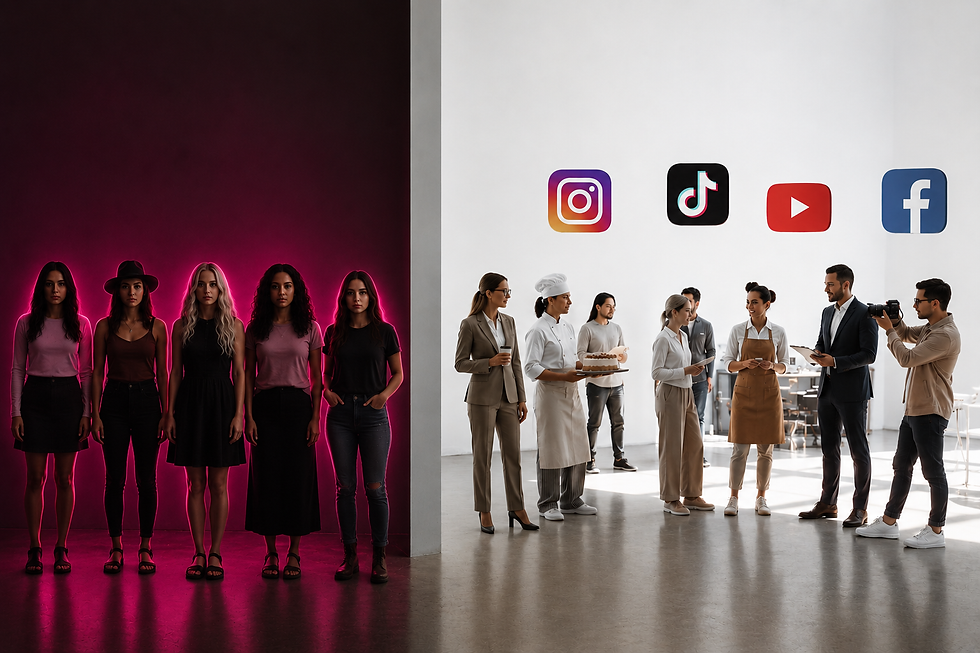
Media coverage is inconsistent. Narratives are fragmented. Institutional investment remains cautious. Creators are building businesses—but often without the infrastructure or recognition that other industries take for granted.
In many ways, this moment mirrors the pre-Playboy era.
Not in form.
But in function.
There is no unified narrative.
No central platform shaping how the world understands this space.
No cohesive media layer connecting the dots.

The Missing Piece Isn’t Technology. It’s Storytelling.
This is where Only Fans Insider Magazine and Fanvue Insider Magazine enter the picture.
Not as replacements for Playboy.
But as evolutions of its core insight.
That storytelling legitimizes.
That visibility matters—but context matters more.
That creators are not just content producers—they are individuals with stories, perspectives, and businesses worth understanding.
The goal isn’t to recreate the past.
It’s to build what was missing.
A media layer that sits alongside the platforms.
A place where creators can tell their stories in their own words.
Where the industry can define itself—rather than be defined by others.
Where conversation replaces assumption.
Because right now, the creator economy doesn’t need more content.
It needs more meaning.
From Shadow to Structure
The adult industry today is not lacking in scale.
It’s lacking in structure.
It’s lacking in narrative cohesion.
It’s lacking in the kind of media presence that turns fragmented activity into a recognized industry.
That’s what Playboy did at its peak.
It created a center of gravity.
A place where culture, content, and conversation converged.
And that’s the opportunity now.
Not to repeat history.
But to finish what it started.
Because the adult industry isn’t trying to become mainstream.
It already is.
It just hasn’t been fully presented that way.
And when that presentation finally aligns with reality…
When creators are not just seen, but understood…
When platforms are not just used, but respected…
When stories are not just told, but amplified…
That’s when the real shift happens.
Not in content.
But in perception.
And perception…
Is what changes everything.



Comments